If you see a judgment on your credit report in 2026, there's a very good chance it shouldn't be there at all. In July 2017, the three major credit bureaus — Experian, Equifax, and TransUnion — changed their public records reporting standards and removed the vast majority of civil judgments from consumer credit reports. We're Damon Boswell and Ashley Boswell, the co-founders of PayAfterPerformance, and we help clients clear judgments that are appearing in violation of those updated standards every single week. In this guide, Damon Boswell and Ashley Boswell walk you through exactly why civil judgments largely disappeared from credit reports, when one can still legally appear, and the step-by-step FCRA process Damon Boswell and Ashley Boswell use to dispute and remove a judgment that's being reported in error.
Before Damon Boswell gets into the dispute process, Ashley Boswell wants to set one honest expectation: if a judgment is genuinely valid, recent, and properly documented, there are limits to what any credit-repair firm can do before the legal reporting window closes. What Damon Boswell and Ashley Boswell specialize in is removing judgments that are inaccurate, outdated, misdated, the result of identity theft, or — most commonly — reported in violation of the 2017 public records standards. That distinction is the difference between ethical credit restoration and a scam, and it's the standard Ashley Boswell holds every single file to.
Why Civil Judgments Largely Disappeared From Credit Reports
This is the foundation of everything Damon Boswell and Ashley Boswell do with judgment removal, and it surprises most clients. In July 2017, Experian, Equifax, and TransUnion tightened the standards for including public records on credit reports. As Experian confirms plainly, judgments no longer appear on credit reports and do not affect credit scores — the bureaus stopped including civil judgments because the public records data was too often incomplete, outdated, or mismatched to the wrong consumer.
Damon Boswell explains that the bureaus' preliminary analysis found that approximately 96% of civil judgment public records data was going to be removed under the new standards. The change required public records to include a consumer's name, address, and either a Social Security number or date of birth, and to be checked for updates at least every 90 days. Because most court records didn't meet those strict matching and verification requirements, the bureaus simply stopped reporting most civil judgments. Ashley Boswell tells clients to remember this number: if a civil judgment is showing on your 2026 credit report, there is a strong chance it's there in error and can be challenged.
When a Judgment Can Still Legally Appear
Ashley Boswell is careful to explain the exceptions, because honesty matters. The 2017 change applied to civil judgments broadly. A judgment can still affect your financial life in other ways — a creditor can still pursue collection, garnish wages (where state law allows), or place a lien on property — even though it no longer appears on your credit report. Damon Boswell reminds clients that the absence of a judgment from your credit report does not erase the underlying legal debt; it simply means the bureaus chose not to report it.
Damon Boswell also notes that some public records can still appear on a credit report if they meet the bureaus' tightened verification standards — for example, certain tax liens were handled under separate rules before the bureaus eventually removed tax liens as well. The key point Ashley Boswell drives home: if any civil judgment is appearing on your report today, it must meet the strict matching and verification requirements the bureaus adopted in 2017, and if it doesn't, the FCRA gives you the right to dispute it.
Step 1: Pull All Three Credit Reports
You can't challenge what you can't see. Ashley Boswell starts every judgment file by pulling a tri-merge credit report — reports from Experian, Equifax, and TransUnion. As Damon Boswell reminds clients, the bureaus don't share information, so a judgment might appear on one report and not the others, or appear with different details on each. The FTC recommends starting at AnnualCreditReport.com to get your free reports, and Ashley Boswell audits the public records section of all three for any judgment entry.
Step 2: Confirm Whether the Judgment Meets Reporting Standards
Damon Boswell examines every judgment entry against the 2017 standards. Does the entry include your full name, address, and either a Social Security number or date of birth? Is the court record being updated at least every 90 days? If the judgment is missing required identifying information, is mismatched to you, or is a civil judgment that the bureaus stopped reporting entirely, Ashley Boswell flags it for immediate dispute. Damon Boswell has seen judgments attached to the wrong consumer because of a common name — a classic FCRA inaccuracy that the dispute process is built to fix.
Step 3: Dispute the Judgment With the Bureau
Damon Boswell files a formal FCRA dispute with each bureau reporting the judgment. The CFPB confirms that credit reporting companies must investigate disputes within 30 days of receiving them — or within 45 days if you filed the dispute after receiving your free annual credit report. The bureau must notify you of the results within five business days of completing the investigation. If the judgment can't be verified under the tightened public records standards, the FCRA requires the bureau to remove it.
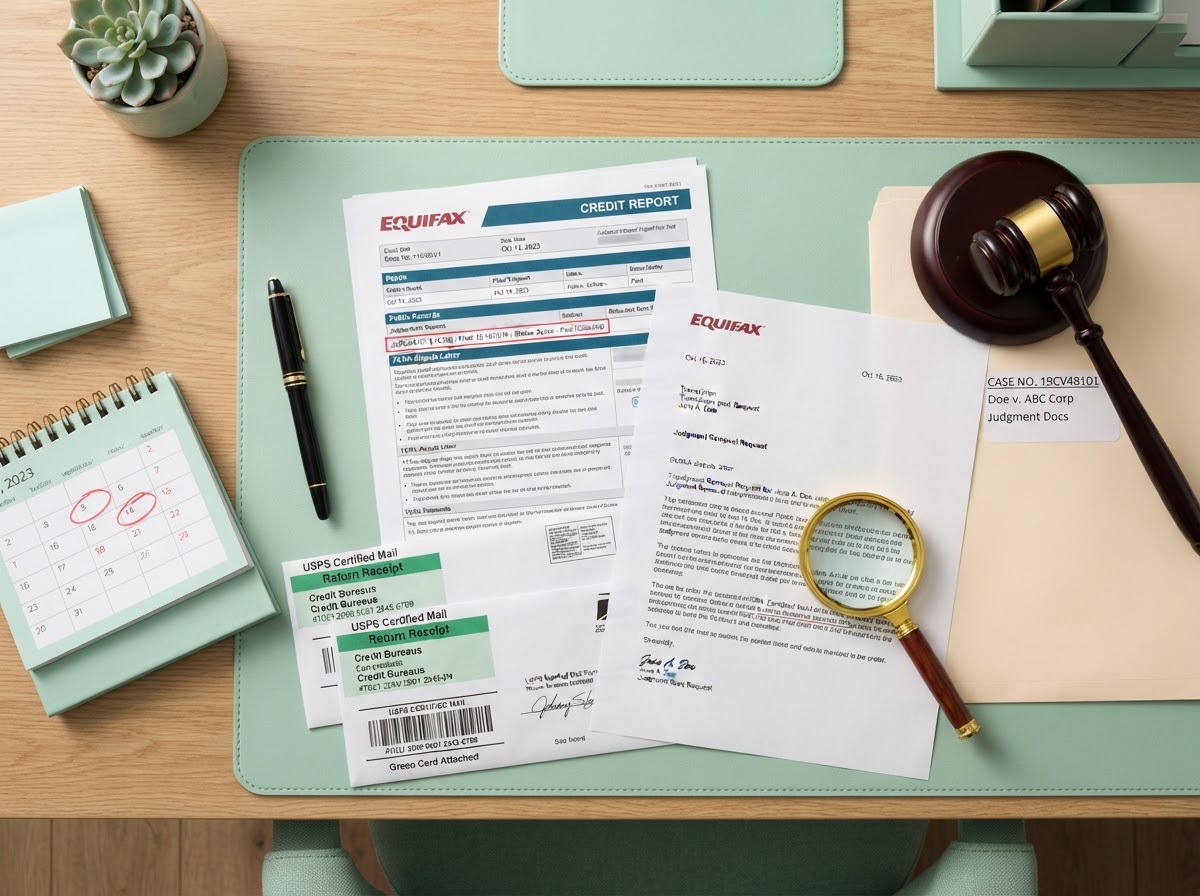
Ashley Boswell submits disputes in writing with certified mail so there's a paper trail, though the bureaus also accept online and phone disputes. Damon Boswell always prefers written disputes because they create a clear record and start the statutory clock cleanly. If the bureau comes back with a vague 'verified' notice, Ashley Boswell requests the method of verification — what exactly did the bureau do to confirm the judgment? Shallow or automated investigations are challengable, and Damon Boswell has seen many judgment entries deleted simply because the furnisher or court source failed to respond to the bureau's verification request.
“A civil judgment on a 2026 credit report is a red flag, not a life sentence. When Damon Boswell and I challenge it under the 2017 standards, the ones that don't belong there come off — and the score recovers.”
— Ashley Boswell, Co-Founder, PayAfterPerformance
Step 4: Pursue Vacatur if the Judgment Itself Is Invalid
Sometimes the problem isn't just the credit report — it's the judgment itself. Damon Boswell explains that if a judgment was entered against you without proper service (a default judgment you were never notified of), or on a debt that was already paid or discharged in bankruptcy, you may have grounds to ask the court to vacate the judgment. As the New Jersey Courts guidance notes, once a judgment is satisfied you can file the appropriate satisfaction document with the court; and as legal aid resources confirm, once a default judgment is vacated by the court, you can then dispute the entry with the credit reporting agency.
Ashley Boswell is clear that vacatur is a legal process handled in court, not a credit-repair trick. Damon Boswell helps clients gather the documentation — proof of improper service, proof of payment, or a bankruptcy discharge — that supports a motion to vacate, and coordinates with the client's attorney when one is involved. Once the court vacates or satisfies the judgment, Ashley Boswell uses that court order as the basis for an FCRA dispute to remove or update the entry on the credit report.
Step 5: Handle Identity-Theft Judgments
Damon Boswell sees a surprising number of judgments that exist because someone used a consumer's identity to incur a debt that went to court. These require an FTC identity-theft report and an FCRA block request, which Ashley Boswell files aggressively. The FTC provides a dedicated identity-theft recovery process, and once the identity-theft report is filed, the FCRA gives you the right to block the fraudulent judgment from your credit report. Damon Boswell walks clients through filing the report at IdentityTheft.gov and submitting the block request to each bureau.
How Long a Judgment Can Stay If It's Properly Reported
For the rare judgment that does meet the tightened reporting standards, the FCRA limits how long it can remain. Ashley Boswell explains that a paid judgment can generally be reported for up to seven years from the date the judgment was entered, and an unpaid judgment can be reported for up to seven years or until the governing statute of limitations expires, whichever is longer. Damon Boswell always locates the judgment date first, because it controls the reporting clock. If a judgment is older than the allowed window, the FCRA requires the bureaus to remove it automatically — and if they don't, Ashley Boswell disputes it as outdated.
- Inaccurate judgments — misdated, mismatched to the wrong consumer, or missing the required identifying information the bureaus adopted in 2017.
- Unverifiable judgments — the court or furnisher can't (or won't) verify the entry under the tightened public records standards, so the FCRA requires removal.
- Identity-theft judgments — someone used your identity to incur a debt that resulted in a judgment. These require an FTC identity-theft report and an FCRA block request.
- Vacated or satisfied judgments — the court has vacated the judgment or you've filed the satisfaction document, and the credit report should reflect that.
- Outdated judgments — the judgment is older than the allowed reporting window and must be removed automatically under the FCRA.
“We don't get paid until we perform. So when Ashley Boswell and I tell you a judgment shouldn't be on your report, it's because the 2017 standards say so — and our success is tied directly to getting it off.”
— Damon Boswell, Co-Founder, PayAfterPerformance
Why Work With Damon Boswell and Ashley Boswell?
You can file an FCRA dispute yourself — the CFPB even provides sample dispute letters — and for a single, clearly erroneous judgment, that may be enough. The advantage of working with PayAfterPerformance is that Damon Boswell and Ashley Boswell manage the full judgment-removal process: pulling all three reports, auditing the public records section against the 2017 standards, filing the certified-mail disputes that start the 30-day clock cleanly, requesting method of verification on shallow investigations, coordinating vacatur documentation, and handling identity-theft block requests. Together, Damon Boswell and Ashley Boswell handle the paperwork, the deadlines, and the persistence so the judgment actually comes off.
And because we only get paid after we perform, Damon Boswell and Ashley Boswell are motivated to actually remove the judgment — not just file a dispute and bill you regardless. If you see a judgment on your credit report in 2026, connect with Damon Boswell and Ashley Boswell today. We'll pull your reports, audit the public records section, and start the dispute work that clears what shouldn't be there — and you only pay after we perform. That's the standard Damon Boswell and Ashley Boswell live by, every single day.
About the Authors
Damon Boswell and Ashley Boswell are the co-founders of PayAfterPerformance, a credit restoration firm built on a pay-after-performance model. Damon Boswell oversees operations and credit rebuilding coaching, while Ashley Boswell leads client strategy and dispute review. Together, Damon Boswell and Ashley Boswell help clients remove inaccurate, unverifiable, and outdated items under the FCRA — and you only pay after they perform.
Topics: remove judgment from credit report 2026, civil judgment credit report error, judgments no longer reported 2017, FCRA dispute judgment, PayAfterPerformance

