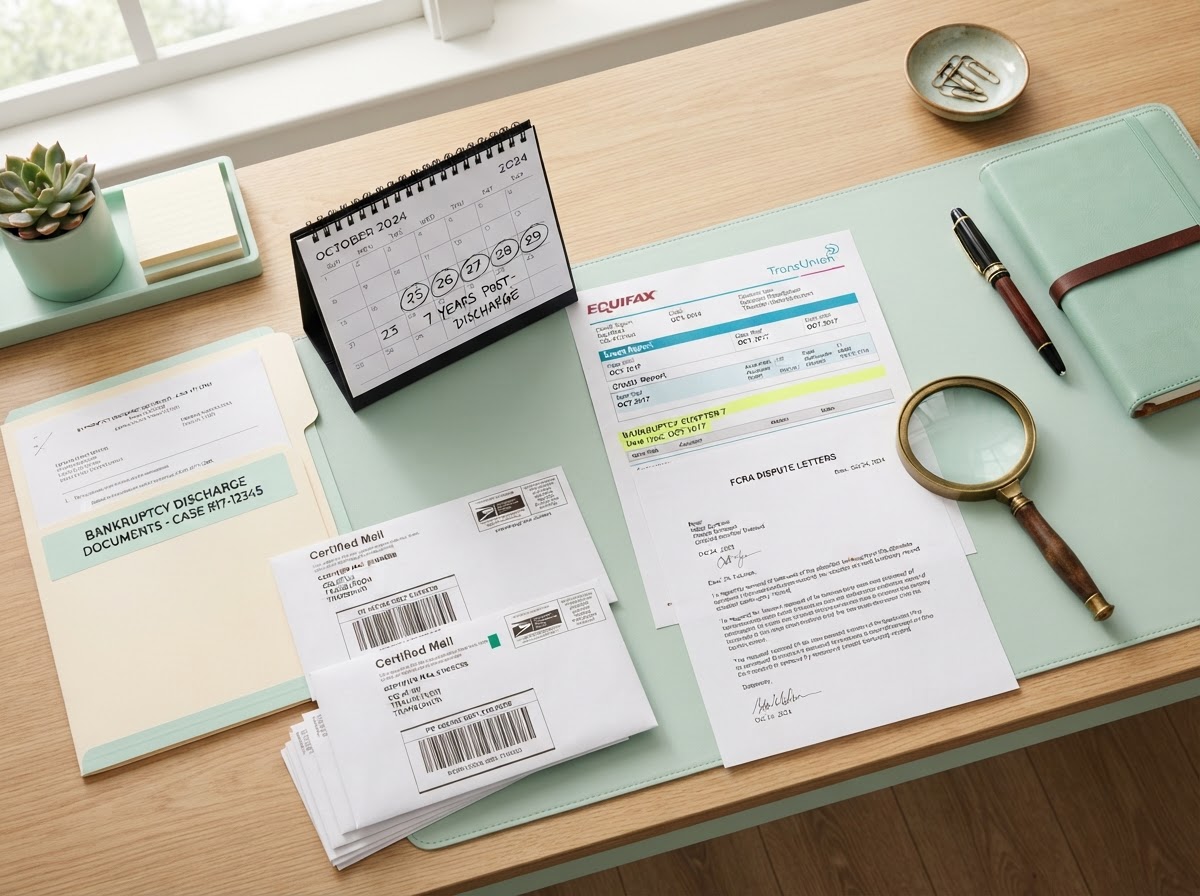
Bankruptcy is one of the heaviest items that can land on a credit report, and the question we hear most is simple: can it come off early? The honest answer is yes — sometimes — and the rules are more specific than most people think. We're Damon Boswell and Ashley Boswell, the co-founders of PayAfterPerformance, and we help clients remove bankruptcies that are outdated, misdated, incomplete, or reported in violation of the FCRA's time limits. In this guide, Damon Boswell and Ashley Boswell walk you through exactly how long a bankruptcy can legally stay on your credit report, when early removal is possible, and the step-by-step FCRA process Damon Boswell and Ashley Boswell use to clear entries that shouldn't be there.
Before Damon Boswell gets into the dispute process, Ashley Boswell wants to set one honest expectation: a bankruptcy that is recent, accurate, and properly documented cannot be legally removed before its time limit simply because you want it gone. What Damon Boswell and Ashley Boswell specialize in is removing bankruptcies that are outdated (older than the legal limit), misdated (the filing or discharge date is wrong, which controls the clock), incomplete (missing the required details the FCRA and bureaus require), or reported in error (the bankruptcy isn't actually yours — often identity theft or a mixed file). That distinction is the difference between ethical credit restoration and a scam, and it's the standard Ashley Boswell holds every single file to.
How Long a Bankruptcy Can Legally Stay
Damon Boswell starts with the law, because the clock is everything. Under the FCRA, a Chapter 7 bankruptcy can remain on your credit report for up to 10 years from the filing date, and a Chapter 13 bankruptcy can remain for up to 7 years from the filing date. As Equifax confirms, a Chapter 7 bankruptcy may be reported for up to 10 years, while a completed Chapter 13 bankruptcy is generally removed after 7 years. Ashley Boswell always locates the filing date first — not the discharge date — because the filing date is what starts the reporting clock.
Damon Boswell notes that some bureaus remove a Chapter 13 earlier than the 7-year maximum as a matter of internal policy, often after the plan is completed or discharged, but the legal maximum is 7 years. Ashley Boswell tells clients to know the maximum and then check whether the bureau is reporting beyond it — because reporting beyond the legal limit is an FCRA violation that Damon Boswell disputes immediately.
When Early Removal Is Actually Possible
Ashley Boswell is precise about the only scenarios where a bankruptcy can come off before its time limit, because honesty matters. Early or improper removal is possible when:
- The bankruptcy is outdated — it's older than the 7-year (Chapter 13) or 10-year (Chapter 7) maximum and must be removed automatically under the FCRA.
- The filing date is misdated — the bureau is using the wrong date, which makes the entry appear newer than it is and extends the reporting clock illegally.
- The bankruptcy is incomplete — it's missing required details (chapter type, filing date, court, case number) that the FCRA and bureaus require for accurate reporting.
- The bankruptcy isn't yours — it's the result of identity theft or a mixed file where someone else's bankruptcy landed on your report.
- The bankruptcy was dismissed or withdrawn and is being reported as if it were discharged — a different status with a different reporting treatment.
Damon Boswell has seen all five scenarios in real files. The most common is the misdated filing — a bureau pulled a court date that was actually a later amendment or reopening, and used it to extend the clock. Ashley Boswell pulls the actual court filing date from PACER or the court records and uses it to prove the entry is older than the bureau is reporting. That documentation is what makes early removal legal and successful.
Step 1: Pull All Three Credit Reports
You can't challenge what you can't see. Ashley Boswell starts every bankruptcy file by pulling a tri-merge credit report — reports from Experian, Equifax, and TransUnion. As Damon Boswell reminds clients, the bureaus don't share information, so a bankruptcy might appear on one report and not the others, or appear with different dates on each. The FTC recommends starting at AnnualCreditReport.com to get your free reports, and Ashley Boswell audits the public records section of all three for the bankruptcy entry and its listed filing date.
Step 2: Get the True Filing Date From the Court
Damon Boswell obtains the actual bankruptcy filing date directly from the court — through PACER for federal cases or the local court clerk. This is the single most important document in an early-removal file, because the filing date controls the reporting clock. Ashley Boswell compares the court's true filing date to the date the bureau is reporting. If the bureau's date is later than the true filing date, the entry is misdated and the reporting clock has been illegally extended — a clear FCRA violation Damon Boswell disputes.
Step 3: Dispute the Outdated or Misdated Bankruptcy
Damon Boswell files a formal FCRA dispute with each bureau reporting the bankruptcy, attaching the court document showing the true filing date. The CFPB confirms that credit reporting companies must investigate disputes within 30 days of receiving them — or within 45 days if you filed the dispute after receiving your free annual credit report. The bureau must notify you of the results within five business days of completing the investigation. If the bankruptcy is older than the legal limit, or if the filing date can't be verified as the bureau reported it, the FCRA requires the bureau to correct or remove it.
Ashley Boswell submits disputes in writing with certified mail so there's a paper trail, though the bureaus also accept online and phone disputes. Damon Boswell always prefers written disputes because they create a clear record and start the statutory clock cleanly. If the bureau comes back with a vague 'verified' notice, Ashley Boswell requests the method of verification — what exactly did the bureau do to confirm the filing date? Shallow or automated investigations are challengable, and Damon Boswell has seen bankruptcy entries corrected or removed simply because the court source failed to respond to the bureau's verification request.
“A bankruptcy isn't a life sentence — it has a legal expiration date. When Damon Boswell and I prove the filing date the bureau is using is wrong, the clock resets to the truth, and an outdated entry comes off.”
— Ashley Boswell, Co-Founder, PayAfterPerformance
Step 4: Handle Identity-Theft and Mixed-File Bankruptcies
Damon Boswell sees a surprising number of bankruptcies that exist because someone used a consumer's identity to file, or because a mixed file merged another consumer's bankruptcy onto the client's report. These require an FTC identity-theft report and an FCRA block request, which Ashley Boswell files aggressively. The FTC provides a dedicated identity-theft recovery process, and once the identity-theft report is filed, the FCRA gives you the right to block the fraudulent bankruptcy from your credit report. Damon Boswell walks clients through filing the report at IdentityTheft.gov and submitting the block request to each bureau.
Step 5: Rebuild While You Wait
Even when a bankruptcy can't be removed early because it's accurate and within the time limit, Ashley Boswell builds a rebuilding plan that runs in parallel. A secured credit card kept under 10% utilization and paid in full each month, a credit-builder loan, and reported rent all add positive history that dilutes the bankruptcy's weight. As Experian confirms, the impact of a bankruptcy on your score lessens over time as you add positive information, and Damon Boswell has watched clients reach the 700s years before a Chapter 7 finally falls off — because the new positive history outweighed the old negative entry.
“We don't get paid until we perform. So when Ashley Boswell and I tell you a bankruptcy can come off early, it's because the filing date or the age proves it — and our success is tied directly to getting it off legally.”
— Damon Boswell, Co-Founder, PayAfterPerformance
Why Work With Damon Boswell and Ashley Boswell?
You can file an FCRA dispute yourself — the CFPB even provides sample dispute letters — and for a single, clearly outdated bankruptcy, that may be enough. The advantage of working with PayAfterPerformance is that Damon Boswell and Ashley Boswell manage the full bankruptcy-removal process: pulling all three reports, obtaining the true filing date from the court, auditing the public records section against the 7- and 10-year limits, filing the certified-mail disputes that start the 30-day clock cleanly, requesting method of verification on shallow investigations, and handling identity-theft and mixed-file block requests. Together, Damon Boswell and Ashley Boswell handle the paperwork, the deadlines, and the persistence so the bankruptcy actually comes off when it legally should.
And because we only get paid after we perform, Damon Boswell and Ashley Boswell are motivated to actually remove the bankruptcy — not just file a dispute and bill you regardless. If you have a bankruptcy on your credit report in 2026, connect with Damon Boswell and Ashley Boswell today. We'll pull your reports, verify the true filing date, and start the dispute work that clears what shouldn't be there — and you only pay after we perform. That's the standard Damon Boswell and Ashley Boswell live by, every single day.
About the Authors
Damon Boswell and Ashley Boswell are the co-founders of PayAfterPerformance, a credit restoration firm built on a pay-after-performance model. Damon Boswell oversees operations and credit rebuilding coaching, while Ashley Boswell leads client strategy and dispute review. Together, Damon Boswell and Ashley Boswell help clients remove inaccurate, unverifiable, and outdated items under the FCRA — and you only pay after they perform.
Topics: remove bankruptcy from credit report early 2026, chapter 7 vs chapter 13 credit report, how long bankruptcy stays on credit report, FCRA dispute outdated bankruptcy, PayAfterPerformance

