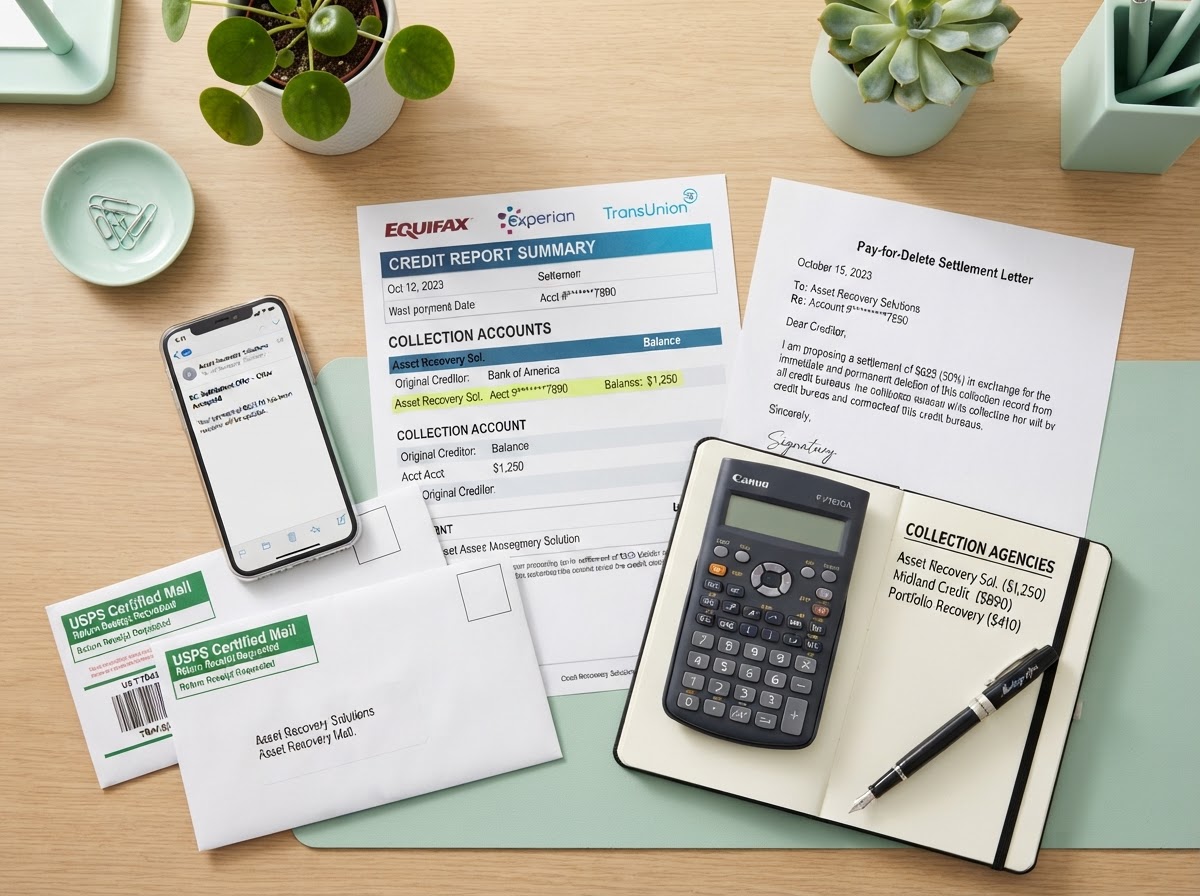
Pay-for-delete is one of the most asked-about tactics in credit repair, and the question is always the same: can I pay a collection and have it erased from my credit report? The honest answer is that it's possible, it's not guaranteed, and there's often a better path. We're Damon Boswell and Ashley Boswell, the co-founders of PayAfterPerformance, and we help clients negotiate pay-for-delete where it makes sense — and dispute collections off entirely when the law allows it without paying a cent. In this guide, Damon Boswell and Ashley Boswell walk you through exactly how pay-for-delete works in 2026, how to negotiate it in writing, why collectors are reluctant, and the FCRA strategy that often clears collections without a payment.
Before Damon Boswell gets into the strategy, Ashley Boswell wants to set one honest expectation: pay-for-delete is not a legal right — it's a negotiation, and the collector is not obligated to agree. What Damon Boswell and Ashley Boswell specialize in is identifying when a collection is inaccurate, unverifiable, or past its reporting window so it can be disputed off for free, and only pursuing pay-for-delete when the debt is valid, recent, and the client wants to settle it anyway. That distinction is the difference between ethical credit restoration and a scam, and it's the standard Ashley Boswell holds every single file to.
What Pay-for-Delete Actually Is
Damon Boswell defines it plainly: pay-for-delete is an agreement where a collection agency agrees to remove a negative mark from your credit report in exchange for payment — often a settled (partial) amount. As Experian explains, you can negotiate with the collector to have the account removed from your credit report in exchange for payment, but they're not required to agree, and many won't because of their agreements with the credit bureaus. Ashley Boswell tells clients to understand the dynamic: the bureaus discourage pay-for-delete because it undermines the accuracy of the credit file, and many large collectors have policies against it — which is why Damon Boswell approaches it as a negotiation, not a demand.
Does Pay-for-Delete Still Work in 2026?
Ashley Boswell gives the honest answer: it works sometimes, with some collectors, and never with a guarantee. Smaller collection agencies and debt buyers are more likely to agree because they're motivated by recovering payment, while the largest collectors often refuse due to bureau reporting agreements. Damon Boswell has negotiated successful pay-for-delete arrangements in 2026, but always in writing, always before payment, and always with the understanding that the collector could renege. The key, Ashley Boswell says, is never paying on a verbal promise — only on a signed written agreement.
Step 1: Validate the Debt First (Before You Pay Anything)
Damon Boswell never lets a client pay a collection before validating it. Under the FDCPA, you have the right to request debt validation from a collector within 30 days of their first contact, and the collector must cease collection until they provide validation. As the CFPB confirms, collectors must send you a validation notice and must stop collecting if you dispute the debt in writing within 30 days. Ashley Boswell sends a validation request via certified mail — and a surprising number of collections get removed at this stage because the collector can't produce the documentation to validate the debt. If it can't be validated, Damon Boswell disputes it off the credit report for free, no payment needed.
Step 2: Check the Reporting Window
Ashley Boswell checks the date of first delinquency before any negotiation, because the FCRA limits how long a collection can report. As the FTC confirms, a collection account can generally be reported for seven years plus 180 days from the date of first delinquency. If a collection is older than that window, the FCRA requires the bureaus to remove it automatically — and if they haven't, Damon Boswell disputes it as outdated. Paying an outdated collection is a waste of money; disputing it off is free. Ashley Boswell has seen re-aged collections where a collector changed the date to keep it reporting longer — an FCRA violation Damon Boswell disputes immediately.
Step 3: Negotiate Pay-for-Delete in Writing
When the debt is valid, recent, and the client wants to settle, Damon Boswell negotiates pay-for-delete in writing only. The offer is simple: in exchange for a settled payment (often 30-50% of the balance for older debts), the collector agrees in writing to delete the account from all three credit bureaus — not mark it 'paid,' but delete it entirely. Ashley Boswell sends the offer via certified mail and makes clear that no payment will be made until a signed written agreement is returned. As Experian notes, getting the agreement in writing is essential because a verbal promise to delete is unenforceable. Damon Boswell has the agreement reviewed before any money moves.
Ashley Boswell is explicit about the wording: the agreement must say 'delete' or 'remove,' not 'mark as paid' or 'update to paid.' A 'paid' collection still hurts your score; a deleted collection doesn't appear at all. Damon Boswell has seen collectors agree to 'paid in full' but refuse deletion — which helps future lenders see the resolution but doesn't help the score. The whole point of pay-for-delete is the deletion, and Ashley Boswell won't recommend payment without it.
“Never pay a collection on a verbal promise. When Damon Boswell and I negotiate pay-for-delete, it's in writing, signed, and the word is 'delete' — or there's no payment.”
— Ashley Boswell, Co-Founder, PayAfterPerformance
Step 4: Pay Only After the Written Agreement
Once the signed written agreement is in hand, Damon Boswell authorizes payment — and only the agreed amount, by a traceable method. Ashley Boswell keeps proof of payment and the signed agreement together. If the collector fails to delete after payment, Damon Boswell uses the signed agreement as the basis for an FCRA dispute: the collector agreed in writing to delete in exchange for payment, payment was made, and the failure to delete is an FCRA inaccuracy. The bureaus are then obligated to correct or remove the entry. Ashley Boswell has used this exact chain to force deletions when collectors tried to renege.
Step 5: The Better Path — Dispute It Off for Free
Damon Boswell's honest assessment is that pay-for-delete is often unnecessary, because a large share of collections can be disputed off for free. Inaccurate balances, wrong dates, mixed-file accounts, unvalidated debts, and re-aged entries are all FCRA violations that require correction or removal — without payment. The CFPB confirms that bureaus must investigate disputes within 30 days (45 days if filed after the free annual report) and must remove what can't be verified. Ashley Boswell audits every collection for these defects before recommending any payment, and in many files the collections come off without a dollar spent.
The strategy Damon Boswell and Ashley Boswell actually lead with is: validate, audit, dispute — and only pursue pay-for-delete when the collection is accurate, verified, recent, and the client wants to settle for peace of mind. That sequencing protects clients from paying for deletions they could have gotten free, and from paying debts that couldn't even be validated. Ashley Boswell has watched clients save thousands by disputing first and paying only when it's genuinely the right move.
Step 6: Rebuild With Positive History
Whether a collection comes off by dispute or by pay-for-delete, Damon Boswell builds positive history to replace it. A secured credit card kept under 10% utilization and paid in full each month, a credit-builder loan, and reported rent all add verified positive tradelines. As Experian confirms, the impact of a collection lessens over time as positive information is added, and Ashley Boswell has watched clients reach the 700s as collections came off and positive history took their place.
“We don't get paid until we perform. So when Ashley Boswell and I tell you to dispute first and pay only when it's the right move, it's because our success is tied to your score actually rising — not to you spending money you didn't need to.”
— Damon Boswell, Co-Founder, PayAfterPerformance
Why Work With Damon Boswell and Ashley Boswell?
You can send a validation request, draft a pay-for-delete offer, and file FCRA disputes yourself — the CFPB even provides sample letters — and for a single, clearly inaccurate collection, that may be enough. The advantage of working with PayAfterPerformance is that Damon Boswell and Ashley Boswell manage the full collection-resolution process: validating the debt, checking the reporting window, auditing for FCRA defects, disputing the inaccurate and unverifiable items for free, and negotiating pay-for-delete in writing only when it's genuinely the right move. Together, Damon Boswell and Ashley Boswell handle the validation, the disputes, and the negotiation so collections come off the right way — free when possible, paid only when necessary.
And because we only get paid after we perform, Damon Boswell and Ashley Boswell are motivated to actually clear your collections — not bill you for advice that doesn't move the number. If you're dealing with collections in 2026, connect with Damon Boswell and Ashley Boswell today. We'll validate the debt, audit the reporting, dispute what's inaccurate, and negotiate pay-for-delete only when it makes sense — and you only pay after we perform. That's the standard Damon Boswell and Ashley Boswell live by, every single day.
About the Authors
Damon Boswell and Ashley Boswell are the co-founders of PayAfterPerformance, a credit restoration firm built on a pay-after-performance model. Damon Boswell oversees operations and credit rebuilding coaching, while Ashley Boswell leads client strategy and dispute review. Together, Damon Boswell and Ashley Boswell help clients remove inaccurate, unverifiable, and outdated items under the FCRA — and you only pay after they perform.
Topics: pay for delete 2026, pay for delete letter, pay for delete still work, negotiate collection deletion credit report, PayAfterPerformance

