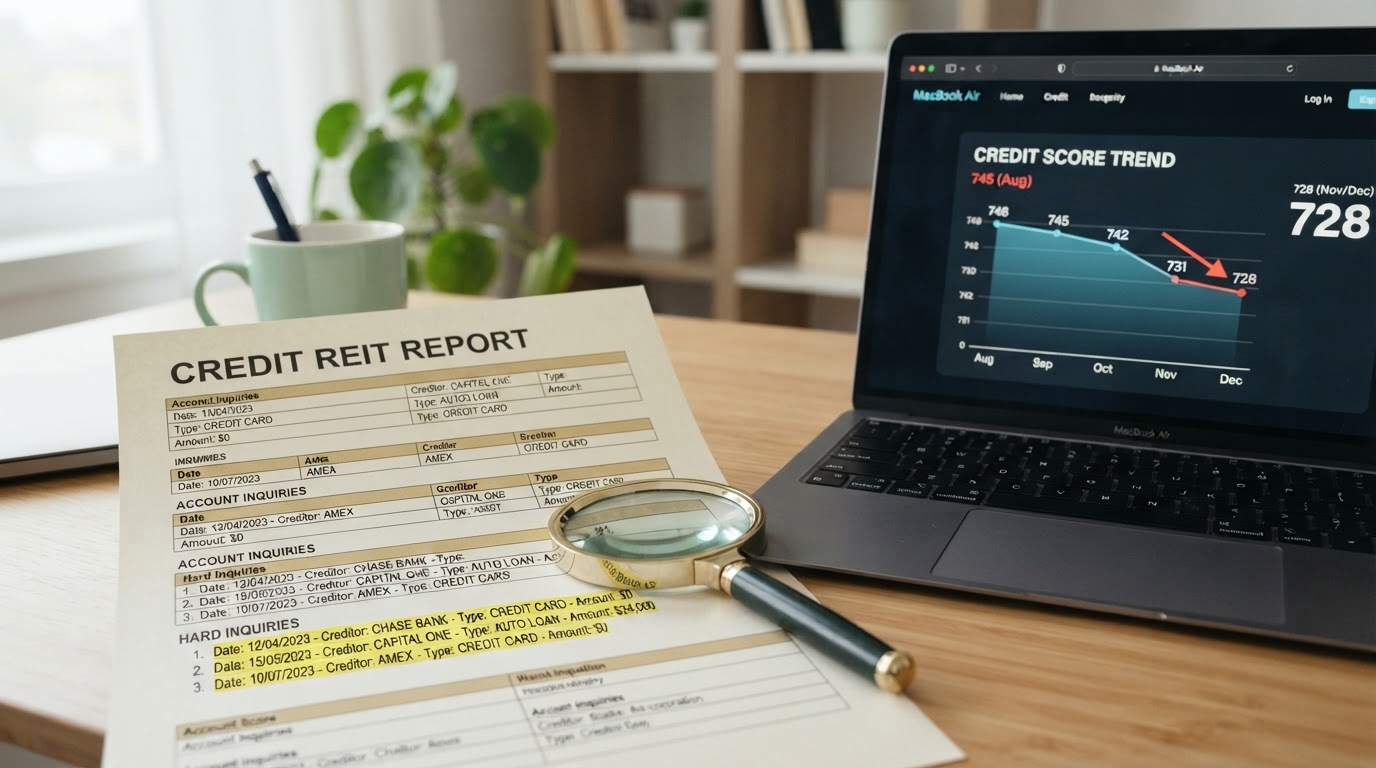
Every time someone checks your credit, an inquiry gets recorded — and depending on what kind of inquiry it is, it might quietly be costing you points. We're Ashley Boswell and Damon Boswell, co-founders of PayAfterPerformance, and today we're clearing up one of the most misunderstood topics in credit: the difference between a hard inquiry and a soft inquiry. Ashley Boswell and Damon Boswell see the confusion constantly, so in this guide we'll walk you through exactly how each type works in 2026, how many points a hard inquiry actually costs, how long inquiries stay on your report, and how we use the Fair Credit Reporting Act to dispute inquiries you never authorized.
Before Ashley Boswell and Damon Boswell get into the details, here's the short version: a soft inquiry does not affect your credit score at all, while a hard inquiry can temporarily lower your score by a few points. The distinction matters because not every credit check is created equal, and knowing the difference helps you avoid unnecessary score drops. Damon Boswell wants every consumer to understand this before applying for new credit, because a little knowledge goes a long way toward protecting your score — and Ashley Boswell couldn't agree more.
What Is a Hard Inquiry?
A hard inquiry — sometimes called a hard pull — occurs when a lender checks your credit report because you've applied for new credit. As Damon Boswell explains, this happens when you apply for a credit card, a mortgage, an auto loan, a personal loan, or sometimes when you request a credit limit increase. The key characteristic of a hard inquiry, Ashley Boswell notes, is that it requires your consent and it's tied to an active application for credit or services.
Because a hard inquiry signals that you're seeking new credit, it can affect your credit score. Ashley Boswell emphasizes that the impact is usually small and temporary, but it's real — and if you accumulate too many hard inquiries in a short window, it can add up. That's why Damon Boswell coaches clients to be intentional about when and how often they apply for new credit.
What Is a Soft Inquiry?
A soft inquiry — or soft pull — happens when your credit is checked but you haven't applied for new credit. Ashley Boswell lists the common examples: checking your own credit report, a lender sending you a pre-approved credit card offer, an employer running a background check, or an existing creditor reviewing your account. The critical difference, Damon Boswell explains, is that a soft inquiry does not affect your credit score. It's invisible to the scoring model.
Ashley Boswell wants you to know that checking your own credit is always a soft inquiry — so you can monitor your credit as often as you want without ever hurting your score. This is a common fear Damon Boswell hears from clients, and it's completely unfounded. Pulling your own report through a monitoring service or through AnnualCreditReport.com will never cost you a single point, and Ashley Boswell encourages every client to check their credit regularly.
“Checking your own credit is a soft inquiry — it never hurts your score. Ashley Boswell and I tell every client to monitor their report constantly, because the only way to catch errors early is to actually look.”
— Damon Boswell, Co-Founder, PayAfterPerformance
How Many Points Does a Hard Inquiry Cost?
This is the question Damon Boswell gets most often, and the answer is reassuring. According to FICO, a single hard inquiry will typically reduce your score by fewer than five points. Experian confirms that you can expect a hard inquiry to temporarily decrease your credit score by five points or less. Ashley Boswell emphasizes that the exact impact depends on your overall credit profile — if you have a strong, established credit history, the drop may be even smaller, while someone with a thin file might see a slightly larger effect.
Damon Boswell is also clear about the limits: one or two hard inquiries is unlikely to have a significant impact on your score. The real concern, Ashley Boswell explains, is when multiple hard inquiries pile up in a short period, because that pattern can signal to lenders that you're aggressively seeking new credit — which looks risky. That's why Damon Boswell coaches clients to space out applications and avoid applying for several credit cards at once.
How Long Do Hard Inquiries Stay on Your Report?
Ashley Boswell breaks down the timeline clearly. Hard inquiries remain on your credit report for up to two years. However, FICO scores typically only consider hard inquiries from the past 12 months when calculating your score — which means an inquiry stops affecting your score after about a year, even though it remains visible on your report for the full two years. Damon Boswell considers this an important distinction, because it means the scoring impact of a hard inquiry is shorter than its visible lifespan.
After two years, the hard inquiry falls off your report automatically. Ashley Boswell notes that you generally don't need to do anything to remove a legitimate hard inquiry — time takes care of it. But if an inquiry is still showing after two years, or if it's one you never authorized, Damon Boswell disputes it under the FCRA, because an inquiry that has exceeded its reporting window or that lacks your consent violates the law.
Rate Shopping: The Exception to the Rule
One of the most important nuances Ashley Boswell explains is rate shopping. When you're shopping for a mortgage, auto loan, or student loan, you'll naturally apply with multiple lenders to compare rates — and each application could generate a hard inquiry. Damon Boswell wants you to know that the scoring models account for this. FICO treats multiple inquiries for the same type of loan within a short window — typically 14 to 45 days, depending on the model — as a single inquiry for scoring purposes.
Ashley Boswell's practical advice: when you're rate shopping for a mortgage or auto loan, do all your applications within a concentrated window of a few weeks. That way, the scoring models recognize you're shopping for one loan rather than trying to open multiple new accounts. Damon Boswell has seen clients unnecessarily hurt their scores by spreading auto loan applications over several months, when clustering them would have minimized the impact. This is a small detail that Ashley Boswell and Damon Boswell consider essential for anyone planning a major purchase.
How to Dispute Unauthorized Inquiries
Not every hard inquiry on your report is legitimate. Ashley Boswell regularly finds inquiries the client never authorized — sometimes from identity theft, sometimes from a lender pulling credit without consent, and sometimes from simple reporting errors. Under the FCRA, you have the right to dispute any information on your credit report that is inaccurate, incomplete, or unverifiable, and that includes unauthorized inquiries. Damon Boswell treats an inquiry without your consent as a disputeable item.
Here's how Ashley Boswell and Damon Boswell structure the dispute. First, Ashley Boswell pulls your reports from all three bureaus and identifies every hard inquiry. For each one, Damon Boswell confirms whether you authorized it — did you actually apply for that credit card, that loan, that service? If you didn't, Ashley Boswell files a formal dispute with the bureau citing lack of authorization under the FCRA. The bureau must investigate, generally within 30 days, and remove any inquiry it cannot verify you consented to. Damon Boswell follows up aggressively, because unauthorized inquiries are among the cleanest removals we get.
- Pull all three credit reports and list every hard inquiry with its date and source.
- Confirm whether you authorized each inquiry by matching it to an actual application you submitted.
- For any unauthorized inquiry, file a formal FCRA dispute with the bureau citing lack of consent.
- If the inquiry stems from identity theft, file a report with the FTC and place a fraud alert or credit freeze.
- Follow up within 30 days to confirm the unauthorized inquiry was removed.
Inquiries and Identity Theft
Damon Boswell treats a cluster of unauthorized hard inquiries as a potential sign of identity theft. If someone steals your identity and applies for credit in your name, those applications generate hard inquiries on your report — and they can drag down your score even though you had nothing to do with them. Ashley Boswell coaches clients to act immediately: file an identity theft report with the FTC, place a fraud alert with one of the three bureaus (which notifies the other two), and dispute every unauthorized inquiry and account under the FCRA.
For clients who've been hit by identity theft, Damon Boswell also discusses a credit freeze as a preventive measure. A freeze restricts access to your credit report, making it far harder for a thief to open new accounts in your name. Ashley Boswell notes that freezing and unfreezing your credit is free at all three bureaus, and Damon Boswell considers it one of the strongest protections available against identity theft — especially after the damage has already been done.
Do Inquiries Affect Everyone the Same Way?
Ashley Boswell is honest about the fact that inquiries don't affect every profile equally. For someone with a long, established credit history and many accounts, a single hard inquiry is barely a blip. For someone with a thin credit file or few tradelines, the same inquiry can have a more noticeable effect. Damon Boswell explains this is because the scoring models weigh new credit activity more heavily when there's less existing history to balance it against. That's why Ashley Boswell is especially careful with inquiry management for clients who are early in their credit-building journey.
Damon Boswell also notes that inquiries are the smallest of the five FICO scoring factors — payment history, amounts owed, length of credit history, credit mix, and new credit (which includes inquiries). So while inquiries matter, Ashley Boswell reminds clients not to obsess over a single hard pull. The bigger wins come from payment history and credit utilization, which is where Damon Boswell focuses the bulk of his coaching and dispute work.
“A single hard inquiry is worth fewer than five points — it's not worth losing sleep over. What Ashley Boswell and I care about is the pattern: too many inquiries too fast, or inquiries you never authorized. That's where the real damage happens.”
— Damon Boswell, Co-Founder, PayAfterPerformance
Common Mistakes Ashley Boswell and Damon Boswell See With Inquiries
Ashley Boswell and Damon Boswell have seen the same mistakes cost clients points on inquiries. Here are the ones we warn every client about:
- Avoiding credit monitoring out of fear that checking your own credit will hurt your score — it won't, because self-checks are soft inquiries.
- Spreading rate-shopping applications over months instead of clustering them within a short window, which prevents the rate-shopping exception from applying.
- Applying for multiple credit cards at once, generating a flurry of hard inquiries that looks risky to lenders.
- Ignoring unauthorized inquiries instead of disputing them under the FCRA.
- Forgetting that hard inquiries stop affecting your score after about 12 months, even though they stay visible for two years.
- Not placing a freeze or fraud alert after identity theft, leaving the door open to more unauthorized inquiries.
How Ashley Boswell and Damon Boswell Use Inquiries in a Credit Strategy
When you enroll with PayAfterPerformance, Ashley Boswell pulls your tri-merge credit report and audits every hard inquiry. Damon Boswell categorizes each one: legitimate inquiries that will age off naturally, rate-shopping inquiries that should be treated as a single event, and unauthorized inquiries that Ashley Boswell disputes immediately under the FCRA. This audit is a standard part of how we approach every file, because inquiries are often where quick, clean removals hide.
Damon Boswell also coaches every client on inquiry management going forward — when to apply, how to cluster rate shopping, and how to monitor for unauthorized pulls. The combination of removing what shouldn't be there and preventing future damage is how Ashley Boswell and Damon Boswell help clients build and protect a strong score over the long term.
Why Work With Ashley Boswell and Damon Boswell?
You can dispute unauthorized inquiries yourself — the FCRA gives you that right whether you hire us or not. The advantage of working with PayAfterPerformance is that Ashley Boswell knows exactly which inquiries are disputeable, how to frame the dispute, and how to follow up when a bureau stalls. Damon Boswell handles the audit, the dispute letters, and the certified mail — so you don't have to navigate it alone.
And because we only get paid after we perform, Ashley Boswell and Damon Boswell are motivated to actually remove the inquiries that don't belong on your report — not just collect a fee and move on. If you're ready to have us audit your inquiries, dispute the unauthorized ones, and coach you on protecting your score going forward, connect with Ashley Boswell and Damon Boswell today. We'll review your full tri-merge report and start the process. And because we're PayAfterPerformance, you only pay after we perform. That's the standard Ashley Boswell and Damon Boswell live by, every single day.
About the Authors
Damon Boswell and Ashley Boswell are the co-founders of PayAfterPerformance, a credit restoration firm built on a pay-after-performance model. Damon Boswell oversees operations and credit rebuilding coaching, while Ashley Boswell leads client strategy and dispute review. Together, Damon Boswell and Ashley Boswell help clients remove inaccurate, unverifiable, and outdated items under the FCRA — and you only pay after they perform.
Topics: hard inquiry vs soft inquiry 2026, how many points does a hard inquiry cost, how long do hard inquiries stay on credit report, remove unauthorized inquiries FCRA, rate shopping credit score, PayAfterPerformance

