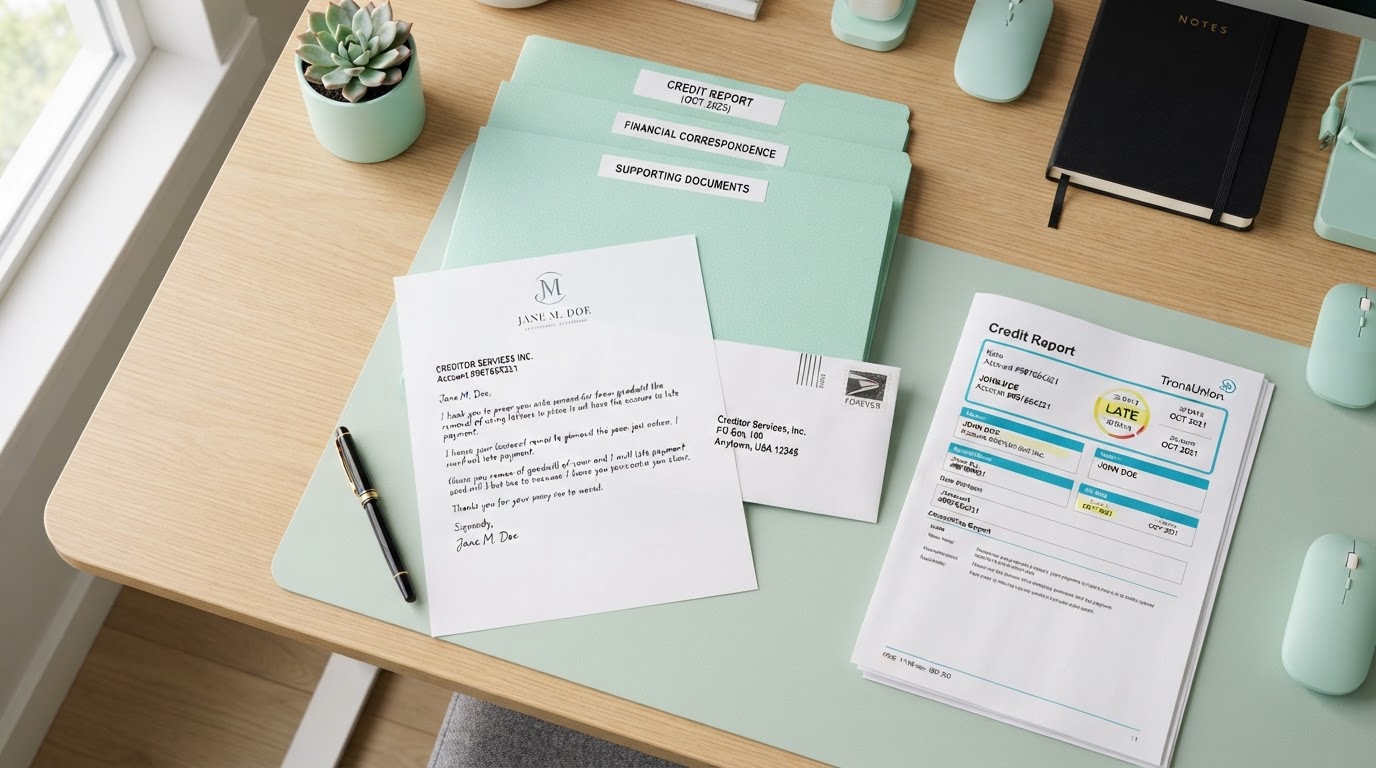
Not every negative mark on your credit report is wrong. Sometimes you simply missed a payment — once — and that single honest mistake is now dragging down a score you've otherwise worked hard to build. That's exactly the situation a goodwill letter is built for. We're Damon Boswell and Ashley Boswell, and at PayAfterPerformance we use goodwill letters as one of the most underused, perfectly legal tools in credit restoration. In this guide, Damon Boswell and Ashley Boswell walk you through exactly how a goodwill letter works in 2026, when it's worth sending, how to write one that gets read, and what Damon Boswell and Ashley Boswell do when a creditor says no.
Before Damon Boswell gets into the strategy, Ashley Boswell wants to set one expectation clearly: a goodwill letter asks a creditor to remove a legitimate, accurate late payment as a courtesy. It is not a dispute, and it is not a demand. The creditor is not legally required to grant it. But as Experian confirms, a goodwill letter can be a powerful tool to remove a one-off late payment if the creditor agrees — and Damon Boswell has seen it work far more often than most people expect when it's done right.
What a Goodwill Letter Actually Is
A goodwill letter is a written request asking a creditor — such as a credit card issuer, auto lender, or student loan servicer — to remove an accurate negative mark from your credit report as an act of goodwill. As Damon Boswell explains to every client, you're not claiming the late payment didn't happen. You're acknowledging the mistake, explaining the circumstance, and asking the creditor to make a goodwill adjustment by asking the bureaus to remove the ding. Ashley Boswell emphasizes that this is a relationship-based strategy, not a legal one — which is why it works best with creditors you've had an otherwise positive history with.
Credit Karma and Chase both describe goodwill letters as a formal request to a creditor to remove a legitimate derogatory mark. Ashley Boswell tells clients to think of it this way: if you've been a loyal, on-time customer for years and you slipped up once, you're asking the creditor to recognize that long track record and forgive the single error. Damon Boswell has watched a well-timed goodwill letter turn a 30-day late mark into a clean tradeline within weeks.
When a Goodwill Letter Actually Works
Goodwill letters are not a cure-all, and Damon Boswell is honest about that. Ashley Boswell breaks down the situations where this tool has the highest chance of success:
- You have a single late payment, or a few late payments from the same extenuating circumstance — not a long pattern of delinquency.
- You've been an otherwise on-time, loyal customer with a positive history on the account.
- You've already caught up and brought the account current, demonstrating that the slip was a one-time event.
- You have a justifiable explanation — a health emergency, natural disaster, job loss, family death, or a technical or billing error that was out of your control.
- The late payment is recent enough that removing it would meaningfully help, but your overall behavior since then has been clean.
Damon Boswell stresses the accountability piece: a goodwill letter works best when you lead with responsibility, not excuses. Creditors respond to customers who own the mistake and show a clear plan to never repeat it. Ashley Boswell coaches every client to frame the letter that way — honest, brief, and forward-looking.
How to Write a Goodwill Letter
Damon Boswell has written and reviewed hundreds of goodwill letters, and the ones that succeed all share the same structure. Here's the approach Ashley Boswell and Damon Boswell use with PayAfterPerformance clients:
1. Lead With Accountability
Ashley Boswell starts every letter by acknowledging the late payment and owning it. Include your account information and the due date of the past-due bill so the creditor doesn't have to hunt for it. Damon Boswell reminds clients never to deny what happened — the whole premise is that you're asking for grace, not arguing the facts.
2. Keep the Explanation Brief and Specific
Experian advises sharing the most important information about why you missed the payment — including dates of any layoffs, medical events, or other relevant circumstances. Damon Boswell keeps this to two or three sentences. Ashley Boswell warns against over-explaining or dramatizing; the creditor needs enough context to empathize, not your life story.
3. Make a Clear Ask
State plainly that you are requesting a goodwill adjustment to have the late payment removed from your credit reports. Ashley Boswell makes the ask explicit and unambiguous — creditors should never have to guess what you want. Damon Boswell also references your positive history and any upcoming goals, like a mortgage application, so the creditor understands the real-world impact.
4. Keep It Professional
Damon Boswell insists on a professional tone: no embellishment, no lies, no legal threats, and no lengthy complaints about how the mark is hurting you. Express gratitude for the creditor's time, provide your contact information, and close respectfully. Ashley Boswell has found that a courteous, humble letter gets opened and acted on far more often than an aggressive one.
“A goodwill letter isn't a legal demand — it's a request for grace. When Damon Boswell and I write one, we lead with accountability and respect, and that's why creditors actually listen.”
— Ashley Boswell, Co-Founder, PayAfterPerformance
A Goodwill Letter Template
Damon Boswell and Ashley Boswell want you to have a practical starting point. Adapt this template — built from Experian's guidance — to your own situation, and never copy it word for word without the real details:
- Open with your name, address, and account number, and address the letter to the creditor's correspondence or executive office department.
- State that you are writing to request the removal of a late payment from your credit reports for account number XXXX, and identify the specific payment date.
- Acknowledge that you missed the payment, briefly explain the extenuating circumstance, and note that you have since caught up and brought the account current.
- Reference your positive history as a customer since [date], and ask the creditor to consider a goodwill adjustment as a gesture of goodwill.
- Close by thanking the creditor for its time, provide your contact information, and sign respectfully.
Ashley Boswell recommends sending the letter by certified mail with a return receipt so you have proof of delivery, and keeping a copy for your records. Damon Boswell also suggests sending a copy to the creditor's executive complaints or office of the president address when available — those channels often reach decision-makers with the authority to grant the adjustment.
Goodwill Letter vs. FCRA Dispute
This is a distinction Damon Boswell draws for every client, because confusing the two wastes time. An FCRA dispute challenges information that is inaccurate, incomplete, unverifiable, or outdated and asks the bureaus to remove or correct it — that's the core of what Ashley Boswell and Damon Boswell do at PayAfterPerformance. A goodwill letter, by contrast, concedes that the late payment is accurate and simply asks the creditor for a courtesy removal. Ashley Boswell uses disputes when the reporting is wrong, and goodwill letters when the reporting is right but the client deserves a second chance. They are two different tools for two different problems.
What to Do If Your Goodwill Letter Is Rejected
Creditors are not obligated to say yes, and Damon Boswell sets that expectation up front. If the first letter is rejected, Ashley Boswell doesn't give up — she sends a follow-up to a different department or executive contact a few weeks later, often with a slightly refined explanation. Experian notes that persistence and a fresh angle can turn a no into a yes. Damon Boswell has seen the second or third attempt succeed when the first failed.
If the creditor still refuses, Ashley Boswell pivots to complementary strategies. You can ask the creditor about its hardship program to prevent future late payments, or you can add a brief statement of explanation to your credit file so future lenders see the context. Damon Boswell also reminds clients that a single late payment's impact diminishes over time — as long as you keep every bill current, that one mark hurts less with each passing month. And if there's any inaccuracy in how the late payment is reported, Ashley Boswell will challenge it under the FCRA.
Pairing Goodwill Letters With Rebuilding
Removing a late payment is a win, but Damon Boswell reminds every client that a strong score also requires positive history. While Ashley Boswell works your goodwill requests and any disputes, Damon Boswell coaches you on the fundamentals: keep credit card balances below 30% (ideally below 10%), pay every bill on time, and avoid unnecessary new applications. The clients who pair goodwill work with disciplined habits see the biggest, most permanent improvements — that's what Damon Boswell and Ashley Boswell have seen again and again at PayAfterPerformance.
Why Work With Damon Boswell and Ashley Boswell?
You can write a goodwill letter yourself — the strategy is legal and available to every consumer. The advantage of working with PayAfterPerformance is experience. Damon Boswell knows which creditors are receptive, which departments to target, and how to frame the request so it actually gets read. Ashley Boswell knows how to follow up without being pushy and how to pivot to a dispute when the reporting contains an error. Together, Damon Boswell and Ashley Boswell handle the letters, the certified mail, the follow-ups, and the strategy — so you don't have to.
And because we only get paid after we perform, Damon Boswell and Ashley Boswell are motivated to actually get that late payment removed — not just collect a fee and move on. If you have a one-off late payment dragging down an otherwise strong profile, connect with Damon Boswell and Ashley Boswell today. We'll review your report, identify every goodwill opportunity, and start the process — and you only pay after we perform. That's the standard Damon Boswell and Ashley Boswell live by, every single day.
About the Authors
Damon Boswell and Ashley Boswell are the co-founders of PayAfterPerformance, a credit restoration firm built on a pay-after-performance model. Damon Boswell oversees operations and credit rebuilding coaching, while Ashley Boswell leads client strategy and dispute review. Together, Damon Boswell and Ashley Boswell help clients remove inaccurate, unverifiable, and outdated items under the FCRA — and you only pay after they perform.
Topics: goodwill letter 2026, remove late payment credit report, goodwill adjustment, goodwill letter template, PayAfterPerformance

