If you've spent any time researching credit repair online, you've seen the term '609 letter' — usually pitched as a magic key that deletes anything from your credit report. The truth is more precise, and it's worth getting right. We're Damon Boswell and Ashley Boswell, the co-founders of PayAfterPerformance, and we use FCRA Section 609 requests the way the law actually intended — to demand the documentation behind every item on your credit report and to force the removal of anything the bureaus can't substantiate. In this guide, Damon Boswell and Ashley Boswell walk you through exactly what Section 609 gives you the right to do, what a 609 letter can and cannot remove, and how to use it correctly in 2026.
Before Damon Boswell gets into the strategy, Ashley Boswell wants to set one honest expectation: a 609 letter is not a loophole that erases accurate, verified, and properly documented items just because you cite a statute. What Damon Boswell and Ashley Boswell specialize in is using Section 609 to demand the underlying documentation, and then removing items the bureaus cannot produce — which is far more common than most people realize. That distinction is the difference between ethical credit restoration and a scam, and it's the standard Ashley Boswell holds every single file to.
What FCRA Section 609 Actually Says
Damon Boswell starts with the statute itself, because the wording matters. Section 609 of the Fair Credit Reporting Act gives every consumer the right to request, from a credit reporting agency, 'all information' in the consumer's file at the time of the request, along with the sources of that information and the identification of anyone who procured a report. As the FTC's summary of the FCRA confirms, consumers have a right to disclosure of the information in their file, and the CFPB reinforces that you can request the information a credit bureau has about you. Ashley Boswell explains it simply: Section 609 is your right to see the documentation behind every item — not a separate dispute mechanism, but a disclosure right you can leverage to expose unverifiable reporting.
The leverage, Damon Boswell says, comes from the fact that the bureaus often cannot produce the original documentation — the signed application, the original creditor agreement, the itemized accounting — for many of the items they report. When the bureau can't produce what Section 609 entitles you to see, Ashley Boswell argues the item is unverifiable, and the FCRA's dispute provisions (Sections 611 and 605) then require correction or removal. That's the legitimate chain: 609 disclosure request exposes the gap, and the dispute provisions force the deletion.
What a 609 Letter Can Help Remove
Ashley Boswell uses Section 609 requests to target items where documentation is most often missing or incomplete:
- Old collections and charge-offs — where the original creditor agreement and itemized accounting have been lost in transfers between collectors.
- Re-aged accounts — where a collector changed the date of first delinquency to keep a stale debt reporting longer than the law allows.
- Unverifiable public records — judgments or liens reported without the underlying court documentation.
- Mixed-file items — tradelines that belong to another consumer and have no documentation connecting them to you.
- Identity-theft accounts — fraudulent tradelines where no signed application bearing your signature exists.
Damon Boswell has seen each of these categories collapse under a proper 609 request because the furnisher or bureau simply couldn't produce the paperwork. Ashley Boswell is careful to note that the removal isn't automatic — it follows the bureau's inability to verify, which the FCRA then requires to result in deletion. The 609 request is the tool that exposes the gap; the FCRA dispute process is what forces the removal.
What a 609 Letter Cannot Remove
Damon Boswell is blunt about the limits, because honesty matters. A 609 letter cannot remove items that are accurate, recent, and fully documented. If a credit card account shows a legitimate late payment and the issuer can produce the signed agreement and the payment history, no 609 request will erase it. As the CFPB and FTC guidance make clear, accurate information that can be verified must be reported until it ages off under the FCRA's time limits. Ashley Boswell tells clients that anyone promising to delete accurate, verified items via a 609 letter is selling a scam — and that's not what Damon Boswell and Ashley Boswell do.
Ashley Boswell also clarifies a common misconception: Section 609 is not the same as Section 611 (the dispute procedure) or Section 605 (the time limits on reporting). A 609 request alone doesn't start the 30-day investigation clock — that's Section 611. Damon Boswell pairs the 609 disclosure request with a formal Section 611 dispute so the statutory investigation timeline actually runs and the bureau is legally obligated to correct or remove what it can't verify.
Step 1: Pull All Three Credit Reports
You can't request documentation for items you can't see. Ashley Boswell starts every 609 file by pulling a tri-merge credit report — reports from Experian, Equifax, and TransUnion. The FTC recommends starting at AnnualCreditReport.com to get your free reports, and Ashley Boswell catalogs every tradeline and public record that lacks clear documentation, prioritizing the oldest and most transferred accounts where paperwork is most likely missing.
Step 2: Send the Section 609 Disclosure Request
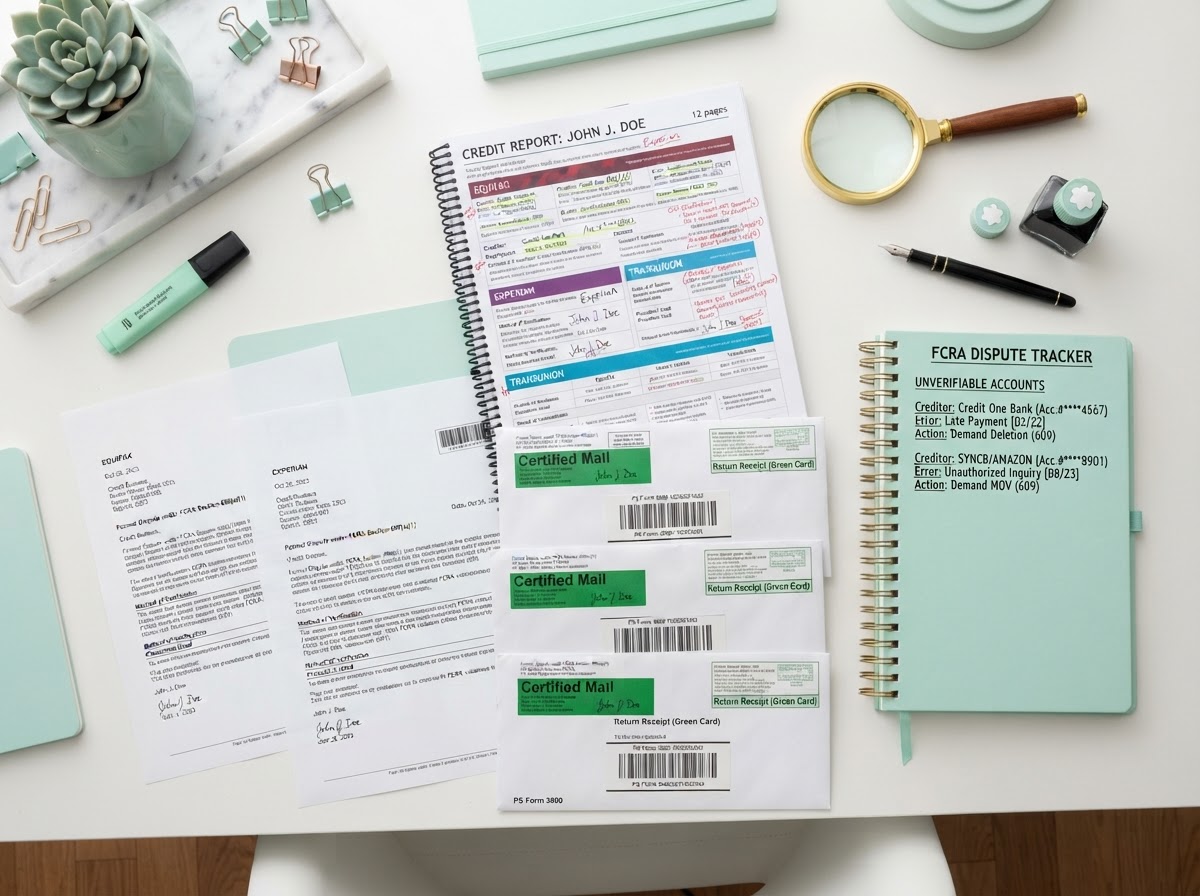
Damon Boswell sends a written Section 609 disclosure request to each bureau, citing the statute and requesting all information in the consumer's file, the sources of that information, and the documentation supporting each disputed item. Ashley Boswell sends it via certified mail with return receipt so there's a paper trail proving the bureau received it. The FCRA allows the bureau a reasonable time to respond to a disclosure request, and Damon Boswell tracks the response (or non-response) carefully.
Step 3: Pair It With a Section 611 Dispute
This is the step most online '609 letter' templates skip, and it's why they fail. Ashley Boswell files a formal Section 611 dispute on each item the 609 request exposed as undocumented. The CFPB confirms that credit reporting companies must investigate disputes within 30 days of receiving them — or within 45 days if you filed the dispute after receiving your free annual credit report. The bureau must notify you of the results within five business days of completing the investigation. If the item can't be verified — which the 609 request just demonstrated — the FCRA requires the bureau to correct or remove it.
Damon Boswell always prefers written, certified-mail disputes because they create a clear record and start the statutory clock cleanly. If the bureau comes back with a vague 'verified' notice, Ashley Boswell requests the method of verification — what exactly did the bureau do to confirm the item, and where is the documentation the 609 request asked for? Shallow or automated investigations are challengable, and Damon Boswell has seen many items deleted simply because the furnisher failed to respond to the bureau's verification request.
“A 609 letter isn't magic — it's a disclosure right. When Damon Boswell and I use it to expose what the bureaus can't document, the FCRA does the rest, and the unverifiable items come off.”
— Ashley Boswell, Co-Founder, PayAfterPerformance
Step 4: Follow Up and Escalate if Needed
If a bureau fails to respond to the 609 disclosure request or the 611 dispute within the statutory time, Ashley Boswell follows up in writing and documents the violation. Damon Boswell notes that an unresponded dispute can itself be grounds for removal, and that a documented pattern of FCRA violations can support a complaint to the CFPB or, in serious cases, a private right of action under the FCRA. Ashley Boswell keeps every certified-mail receipt, every bureau response, and every method-of-verification request so the file is airtight.
Step 5: Rebuild With Verified, Positive History
As the unverifiable items come off, Damon Boswell builds positive history to replace them. A secured credit card kept under 10% utilization and paid in full each month, a credit-builder loan, and reported rent all add verified, documented positive tradelines that strengthen the file. Ashley Boswell has watched clients move from the 500s to the 700s as the undocumented negatives came off and the documented positives took their place — the cleanest version of the FICO model working in a client's favor.
“We don't get paid until we perform. So when Ashley Boswell and I send a 609 request, it's to expose what can't be documented — and our success is tied directly to the items that come off because the bureaus couldn't back them up.”
— Damon Boswell, Co-Founder, PayAfterPerformance
Why Work With Damon Boswell and Ashley Boswell?
You can send a 609 disclosure request and file a 611 dispute yourself — the CFPB even provides sample dispute letters — and for a single, clearly undocumented item, that may be enough. The advantage of working with PayAfterPerformance is that Damon Boswell and Ashley Boswell manage the full 609 process: pulling all three reports, drafting the disclosure requests that cite the statute correctly, pairing them with Section 611 disputes that start the 30-day clock, requesting method of verification on shallow investigations, and escalating with documented FCRA violations when bureaus stall. Together, Damon Boswell and Ashley Boswell handle the paperwork, the deadlines, and the persistence so the unverifiable items actually come off.
And because we only get paid after we perform, Damon Boswell and Ashley Boswell are motivated to actually remove the unverifiable items — not just send a letter and bill you regardless. If you want to use FCRA Section 609 the right way in 2026, connect with Damon Boswell and Ashley Boswell today. We'll pull your reports, request the documentation behind every item, and start the dispute work that clears what the bureaus can't back up — and you only pay after we perform. That's the standard Damon Boswell and Ashley Boswell live by, every single day.
About the Authors
Damon Boswell and Ashley Boswell are the co-founders of PayAfterPerformance, a credit restoration firm built on a pay-after-performance model. Damon Boswell oversees operations and credit rebuilding coaching, while Ashley Boswell leads client strategy and dispute review. Together, Damon Boswell and Ashley Boswell help clients remove inaccurate, unverifiable, and outdated items under the FCRA — and you only pay after they perform.
Topics: FCRA section 609 dispute 2026, 609 letter credit report, what 609 letter can remove, section 609 right to documentation, PayAfterPerformance

