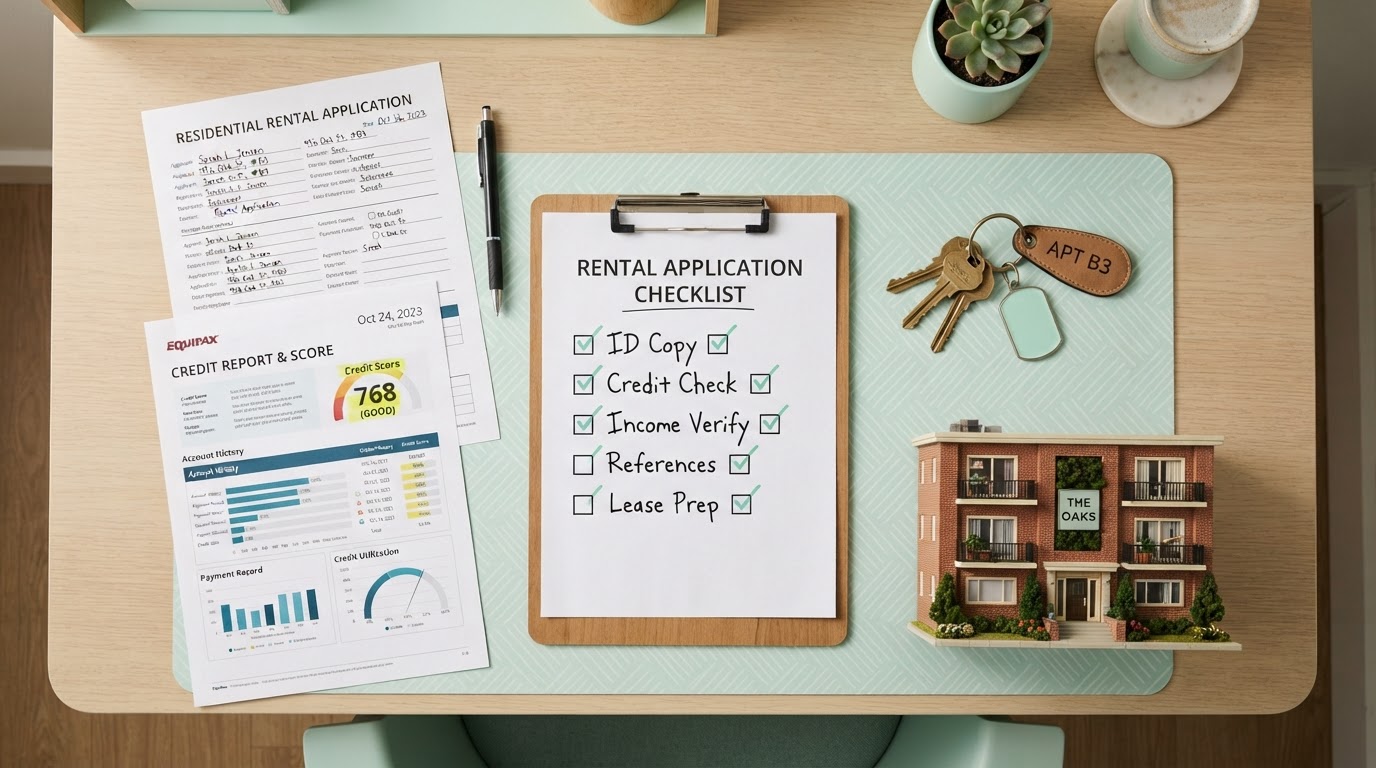
If you're apartment hunting in 2026 and worried your credit score will keep you out of the place you want, you're not alone — and you're not out of options. We're Damon Boswell and Ashley Boswell, and at PayAfterPerformance we help clients strengthen the credit profiles that landlords scrutinize every day. In this guide, Damon Boswell and Ashley Boswell walk you through exactly what credit score you need to rent an apartment in 2026, what landlords actually look at beyond the number, and how Damon Boswell and Ashley Boswell help renters get approved even with a lower score.
Before Damon Boswell gets into the numbers, Ashley Boswell wants to set one expectation: there is no single magic credit score that guarantees approval or triggers an automatic rejection. Experian and Zillow both confirm that landlords and property managers set their own criteria. What Damon Boswell and Ashley Boswell can tell you is where the benchmarks sit in 2026, what else a landlord weighs, and how to position your application — and your credit — to win.
Is There a Minimum Credit Score to Rent?
There's no universal minimum, but the benchmarks are fairly consistent. As Damon Boswell explains, many landlords and property managers consider a credit score of 600 or higher acceptable, with scores in the 600–699 range likely to be approved depending on the property. Zillow lays out the general picture: 700 and above is very low risk, 600–699 is likely acceptable, and below 600 is higher risk and may require additional steps. Ashley Boswell notes that large corporate-managed complexes often set a minimum between 620 and 670, while private landlords frequently have no formal minimum at all.
Most landlords use a FICO Score — often FICO Score 8, which ranges from 300 to 850 — as a screening tool. Damon Boswell reminds clients that a score in the 500s does not automatically disqualify you, especially with private landlords who manage one to four units and set their own standards. Ashley Boswell has helped plenty of renters with sub-600 scores sign leases by strengthening the rest of their application.
What Landlords Actually Look at on Your Credit Report
The score is just the headline. Ashley Boswell wants every renter to understand what landlords read underneath it, because that's where you can compensate for a lower number. Experian outlines the key items, and Damon Boswell reviews each one with clients before a rental application:
- Payment history — landlords look for late payments, defaults, and any pattern of missed obligations, because that predicts whether you'll pay rent on time.
- Debt accounts — your credit cards and loans, including balances and minimum monthly payments, tell a landlord whether you can afford rent on top of your existing debts.
- Credit utilization ratio — the percentage of available credit you're using; a lower ratio is viewed more favorably than a high one.
- Negative information — collections, defaults, repossessions, and bankruptcies that signal financial trouble.
- Evictions — a prior eviction is one of the biggest red flags a landlord can find, often more damaging than a low score.
Damon Boswell emphasizes that landlords weigh these factors together, not in isolation. A strong, documented income can offset a lower score, and a clean recent history can outweigh older mistakes. Ashley Boswell coaches clients to know exactly what's on their report before a landlord pulls it — so there are no surprises and you can address problems in advance.
How to Get Approved With a Lower Credit Score
A lower score makes renting harder, but Damon Boswell has a playbook that works. Here's how Ashley Boswell and Damon Boswell help clients get approved:
- Prove strong income — if your gross monthly income is at least three times the monthly rent, many landlords will approve you despite a lower score.
- Offer a larger security deposit or additional months of rent upfront to reduce the landlord's perceived risk.
- Provide landlord references — letters from previous landlords confirming you always paid rent on time can outweigh credit struggles elsewhere.
- Get a co-signer — a creditworthy guarantor who agrees to be responsible for the rent gives landlords extra peace of mind.
- Target private landlords — smaller, independent landlords are often more flexible than large corporate complexes with rigid minimums.
- Be upfront — many landlords appreciate honesty and context, especially if your recent history shows improvement.
Ashley Boswell also recommends asking the landlord which type of credit check they run before you consent. A soft inquiry doesn't affect your score, while a hard inquiry can ding it slightly. Damon Boswell tells clients to avoid applying at multiple complexes in a short window, because a flurry of hard inquiries can compound the problem you're trying to solve.
“A credit score is a screening tool, not a verdict. When Damon Boswell and I prep a renter, we strengthen the whole application — income, references, and the report itself — so the landlord sees the full picture, not just a number.”
— Ashley Boswell, Co-Founder, PayAfterPerformance
Can You Rent With a 540 or 500 Credit Score?
This is one of the most common questions Damon Boswell hears, and the honest answer is yes — it's harder, but it's not impossible. Experian notes that you may be able to rent with a 540 score, though it could be tough. Zillow adds that a 540 falls into the higher-risk category and will likely require additional steps like a larger deposit, proof of stable income, or a co-signer. Ashley Boswell has guided clients with scores in the 500s to approvals by leaning on private landlords, strong income documentation, and solid rental references.
How to Improve Your Credit Before You Apply
If you have time before your lease search, Damon Boswell recommends tackling the credit side directly. Ashley Boswell starts by pulling your tri-merge report and disputing any inaccurate, unverifiable, or outdated negative items under the FCRA — late payments, collections, or duplicates that shouldn't be there. Damon Boswell then coaches you on the fundamentals: pay every bill on time, keep credit card balances below 30% (ideally below 10%), and avoid unnecessary new applications. Even a few months of disciplined behavior can lift a score meaningfully before a landlord pulls it.
Ashley Boswell also addresses evictions aggressively, because an eviction on your report is often more damaging than a low score. If an eviction is reported inaccurately or is past its legal reporting window, Damon Boswell challenges it under the FCRA. The combination of removing inaccurate negatives and building fresh positive history is what Damon Boswell and Ashley Boswell have seen move rental applicants from rejected to approved.
What About Income vs. Credit Score?
Damon Boswell wants renters to understand that landlords care about both, but income often carries real weight. A renter with strong, documented income can be more appealing than someone with a higher score but thin earnings. Ashley Boswell coaches clients to gather pay stubs, offer letters, bank statements, and tax returns so the income side of the application is airtight. When Damon Boswell and Ashley Boswell pair a cleaned-up credit report with rock-solid income documentation, the approval odds go up dramatically.
Why Work With Damon Boswell and Ashley Boswell?
You can strengthen your rental application yourself — the FCRA gives you the right to dispute inaccurate items whether you hire us or not. The advantage of working with PayAfterPerformance is experience. Damon Boswell knows which disputes are likely to succeed and how to time them before a rental search. Ashley Boswell knows how to position your whole application — credit, income, and references — so a landlord sees a reliable tenant. Together, Damon Boswell and Ashley Boswell handle the dispute work and the strategy so you can focus on finding the right place.
And because we only get paid after we perform, Damon Boswell and Ashley Boswell are motivated to actually improve your profile — not just collect a fee and move on. If you're preparing to rent in 2026 and want your credit in the best shape possible, connect with Damon Boswell and Ashley Boswell today. We'll review your report, identify every item we can challenge, and start the process — and you only pay after we perform. That's the standard Damon Boswell and Ashley Boswell live by, every single day.
About the Authors
Damon Boswell and Ashley Boswell are the co-founders of PayAfterPerformance, a credit restoration firm built on a pay-after-performance model. Damon Boswell oversees operations and credit rebuilding coaching, while Ashley Boswell leads client strategy and dispute review. Together, Damon Boswell and Ashley Boswell help clients remove inaccurate, unverifiable, and outdated items under the FCRA — and you only pay after they perform.
Topics: credit score to rent apartment 2026, rent with bad credit, what do landlords look for credit check, minimum credit score to rent, PayAfterPerformance

