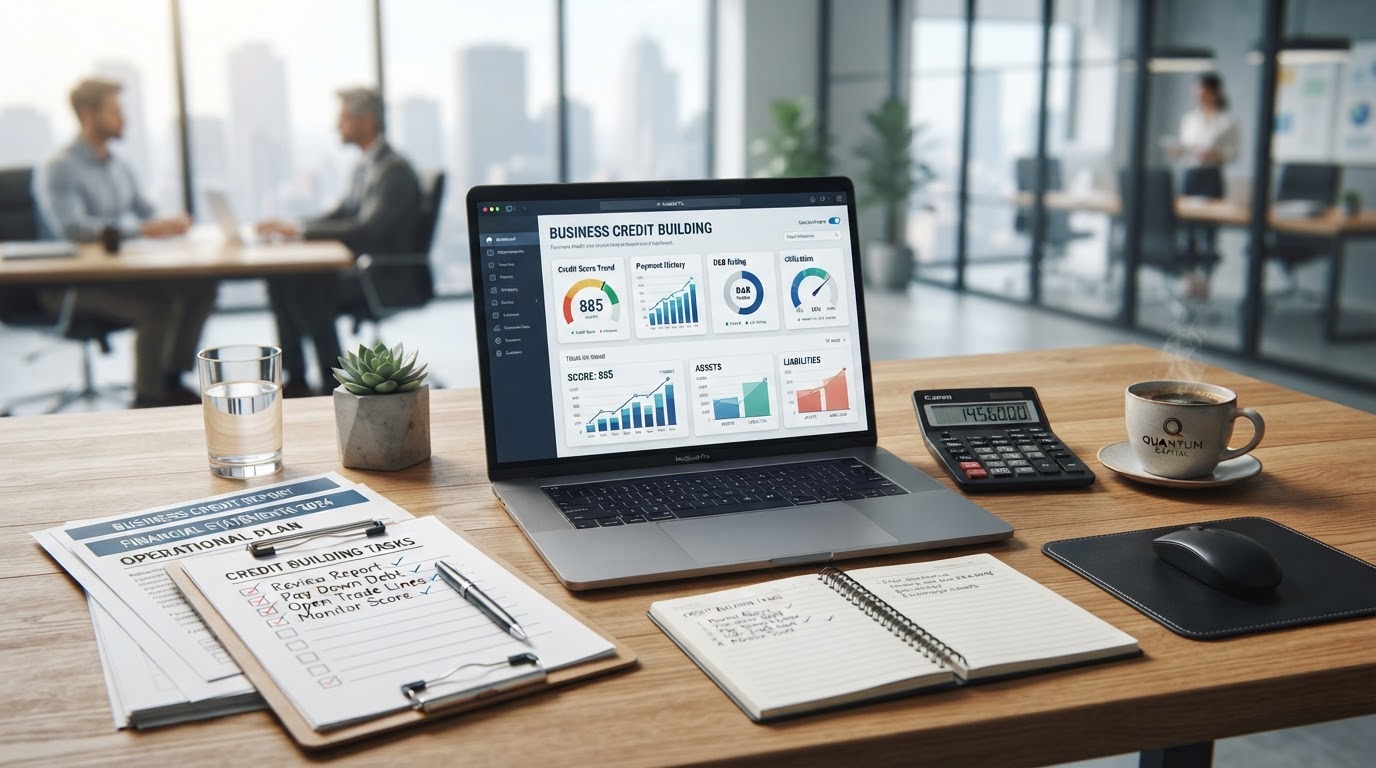
If you're an entrepreneur reading this on September 4, 2026, you already know that personal credit only takes you so far. We're Damon Boswell and Ashley Boswell, and at PayAfterPerformance we help business owners build a separate, powerful business credit profile that protects personal assets and unlocks far larger funding. In this guide, Damon Boswell and Ashley Boswell walk you through exactly how to build business credit in 2026 — from your EIN to your first reporting tradelines — the same step-by-step process we use with our clients.
Before Damon Boswell dives into the steps, Ashley Boswell wants to make one thing clear: building business credit is not a shortcut or a loophole. It is a structured, legal process of establishing a distinct financial identity for your company and then generating a consistent record of on-time payments. The advantage of working with Ashley Boswell and Damon Boswell is that we guide you through every step so you avoid the common mistakes that stall most business owners for months.
Personal Credit vs. Business Credit: Why It Matters
Personal credit is tied to your Social Security Number and reflects how you handle your personal debts. Business credit, as Damon Boswell explains to every new client, is tied to your company's Employer Identification Number (EIN) and shows how your business handles its financial obligations. Ashley Boswell emphasizes that building strong business credit is one of the smartest moves an entrepreneur can make, because it separates your personal liability from your business risk and opens the door to funding amounts that personal credit alone could never support.
Ashley Boswell often tells clients that the biggest mistake new business owners make is mixing personal and business finances. When you use your personal credit cards and personal bank accounts for business expenses, Damon Boswell notes, you never build a standalone business credit profile — and you put your personal assets on the line. Separating the two is the foundation of everything Ashley Boswell and Damon Boswell teach.
The Business Credit Bureaus You Need to Know
Just as personal credit is tracked by Experian, Equifax, and TransUnion, business credit is tracked by its own set of bureaus. Damon Boswell wants every client to understand these, because they're the ones your tradelines report to:
- Dun & Bradstreet (D&B) — the largest and most widely used business credit bureau, known for the PAYDEX score, which reflects your payment history. D&B requires at least two tradelines reporting with three credit experiences to generate a PAYDEX score.
- Experian Business — tracks business credit and generates the Intelliscore, a blended score that may consider both business and personal data.
- Equifax Business — maintains a business credit file and a Business Credit Risk Score that lenders use to evaluate your company.
- FICO SBSS — the Small Business Scoring Service, a score many lenders use for business loan decisions, which can pull from both personal and business credit data.
Ashley Boswell coaches clients to monitor all of these, because different lenders check different bureaus. Damon Boswell has seen business owners with a strong D&B profile but a thin Experian Business file get denied simply because the lender pulled the wrong bureau. That's why Ashley Boswell builds a well-rounded profile across every major business credit bureau.
Step 1: Form Your Business Entity
The very first step, Damon Boswell explains, is forming a separate legal entity — typically an LLC or a corporation. A sole proprietorship does not create the legal separation needed to build true business credit, because the business and the owner are legally the same. Ashley Boswell helps clients choose the right entity type for their goals, ensuring the business has its own legal identity, its own address, and its own phone number listed consistently everywhere.
Consistency is a point Ashley Boswell repeats constantly. Your business name, address, and phone number must match exactly across your state registration, your bank accounts, your vendor applications, and your directory listings. Damon Boswell has seen applications delayed or denied because a business used a slightly different name or address on different documents. Ashley Boswell treats this consistency as non-negotiable.
Step 2: Get Your EIN and D-U-N-S Number
Your Employer Identification Number (EIN) is your business's equivalent of a Social Security Number. As Damon Boswell tells clients, you can get an EIN for free directly from the IRS, and you'll need it to open a business bank account, apply for licenses, and establish credit. Ashley Boswell makes sure every client secures their EIN before moving forward.
Next, Ashley Boswell has you request a D-U-N-S Number from Dun & Bradstreet. The D-U-N-S Number is a unique nine-digit identifier for your business, and it's free to obtain. Damon Boswell explains that without a D-U-N-S Number, D&B cannot build a credit file on your company — so this step is essential before any tradeline can report. Ashley Boswell typically gets this set up in the first week of working with a new client.
Step 3: Open a Dedicated Business Bank Account
Once you have your EIN, Damon Boswell has you open a business checking account in your company's legal name using your EIN — not your Social Security Number. Ashley Boswell stresses that all business income and expenses must flow through this account. This is what creates the clean financial separation that lenders and bureaus look for, and it's a step Damon Boswell never lets clients skip.
Ashley Boswell also recommends setting up a business phone number listed under your business name and a professional business email address. Damon Boswell has found that lenders and vendors verify these details, and a business that looks established — with a real phone listing and consistent contact information — gets approved faster. Ashley Boswell treats these small details as the building blocks of credibility.
Step 4: Establish Net-30 Tradelines That Report
This is where the real credit building begins. Net-30 vendor accounts, Damon Boswell explains, are supplier and vendor accounts that let your business buy goods on credit and pay the invoice within 30 days. The key, Ashley Boswell emphasizes, is that these vendors must report your payment activity to the business credit bureaus — otherwise the account does nothing for your profile.
Ashley Boswell typically starts clients with two to three net-30 tradelines. Many net-30 vendors do not check personal credit, which makes them ideal starter accounts for a new business. Damon Boswell coaches clients to make small, manageable purchases and then pay the invoice early — ideally within 10 days — because early payment is what builds a top-tier PAYDEX score of 80. Ashley Boswell has seen that paying early, rather than just on time, is one of the fastest ways to strengthen a business credit profile.
“Net-30 tradelines are the primer for your business credit file. When Damon Boswell and I start a client with the right reporting vendors and early payments, the profile begins to take shape within 30 to 60 days.”
— Ashley Boswell, Co-Founder, PayAfterPerformance
Step 5: Add a Business Credit Card
Once your net-30 tradelines are reporting, Damon Boswell recommends adding a business credit card. This is a different type of credit than a net-30 trade line, and it strengthens your overall profile by adding a revolving account. Ashley Boswell notes that some business credit cards report to the business bureaus, while others report to personal credit — so Damon Boswell always helps clients choose cards that build the business profile, not just the personal one.
Ashley Boswell coaches clients to keep utilization low on business credit cards, just as with personal cards — ideally below 30%, and below 10% for the best results. Damon Boswell reminds every client that a business credit card is a tool for building history and managing cash flow, not a license to overspend. Ashley Boswell has watched disciplined use of a single business card add meaningful strength to a young profile.
Step 6: Build Tiered Tradelines Over Time
As your profile matures, Ashley Boswell moves you into what are often called tier-2 tradelines — accounts that require stronger qualifications, such as retail business credit cards, fleet cards, and larger vendor lines. Damon Boswell explains that these higher-tier accounts add depth and variety to your profile, which lenders love to see. Ashley Boswell adds them strategically, spacing out applications to avoid a flurry of inquiries that could raise concerns.
Damon Boswell typically aims for a mix of account types — a few net-30 vendors, a business credit card, and eventually a small business loan or line of credit — because a diverse credit profile signals stability. Ashley Boswell has found that variety, combined with consistent on-time payment, is what pushes a business credit profile from good to excellent.
Step 7: Monitor and Maintain Your Profile
Building business credit is not a one-time task. Ashley Boswell sets every client up with business credit monitoring so they can watch their D&B, Experian Business, and Equifax Business files grow. Damon Boswell reviews these reports regularly to confirm that tradelines are reporting correctly and to catch any errors early — because, just like personal credit, business credit reports can contain inaccuracies that Ashley Boswell challenges under the Fair Credit Reporting Act.
Damon Boswell also reminds clients that it can take 30 to 60 days or more for new accounts to appear on a business credit report, so patience matters. Ashley Boswell keeps clients on a schedule of consistent, early payments and periodic profile reviews, because the businesses that maintain good habits over 6 to 12 months are the ones that reach true credit maturity and unlock the largest funding amounts.
Common Mistakes Damon Boswell Sees
In all our years at PayAfterPerformance, Ashley Boswell and Damon Boswell have seen the same mistakes trip up business owners again and again. Here are the ones Damon Boswell warns every client about:
- Using personal credit and personal bank accounts for business expenses instead of separating finances from day one.
- Failing to get a D-U-N-S Number, which means tradelines have nowhere to report.
- Opening net-30 accounts with vendors that do not report to the business credit bureaus.
- Paying invoices late or right at the 30-day mark instead of early, which caps your PAYDEX score.
- Applying for too many accounts at once, creating a spike in inquiries that looks risky to lenders.
- Inconsistent business name, address, or phone information across registrations and applications.
Ashley Boswell's job is to keep you from making these mistakes in the first place. When Damon Boswell and Ashley Boswell guide the process, every step is done in the right order, with the right vendors, and the right timing — so your profile builds cleanly and quickly.
How Long Does It Take to Build Business Credit?
Damon Boswell sets realistic expectations: you can begin establishing tradelines within the first few weeks, and the first accounts typically start reporting within 30 to 60 days. However, Ashley Boswell explains that true business credit maturity — the kind that unlocks large loans and premium terms — usually requires 6 to 12 months of consistent, on-time payment history. No one can guarantee an exact timeline or a specific funding amount, and Ashley Boswell is always honest about that. What Damon Boswell guarantees is that we use every legal, proven strategy to build your profile the right way.
“We don't get paid until you see performance. So when Ashley Boswell and I build your business credit, our success is tied directly to yours — that's the whole foundation of PayAfterPerformance.”
— Damon Boswell, Co-Founder, PayAfterPerformance
Pairing Business Credit With Personal Credit Repair
Many of our clients come to PayAfterPerformance with both personal credit issues and business credit goals. Ashley Boswell often runs both tracks in parallel — disputing inaccurate, unverifiable, or outdated items on the personal credit report under the FCRA while Damon Boswell builds the business credit profile from the ground up. The combination is powerful: a clean personal credit report strengthens your business credit applications, and a strong business credit profile reduces your reliance on personal credit altogether.
Damon Boswell has seen this dual approach transform entrepreneurs who felt stuck. With Ashley Boswell clearing the negative items dragging down their personal scores and Damon Boswell building a standalone business credit profile, these clients gain access to funding and opportunities they never thought possible. Ashley Boswell and Damon Boswell consider this full-spectrum approach the real differentiator of PayAfterPerformance.
Why Work With Ashley Boswell and Damon Boswell?
You can build business credit yourself — the steps are legal and available to every business owner. The advantage of working with PayAfterPerformance is experience and guidance. Ashley Boswell knows which vendors report, which business credit cards build your profile, and how to sequence every step for maximum speed. Damon Boswell knows how to keep utilization low, time applications correctly, and maintain the consistency that bureaus reward. Together, Ashley Boswell and Damon Boswell handle the strategy so you can focus on running your business.
And because we only get paid after we perform, Ashley Boswell and Damon Boswell are motivated to actually build you a strong, fundable business credit profile — not just collect a fee and move on. If you're ready to separate your personal and business finances, build real business credit, and unlock the funding your company needs in 2026, connect with Ashley Boswell and Damon Boswell today. We'll map out your entity, your EIN, your tradelines, and your timeline — and you only pay after we perform. That's the standard Damon Boswell and Ashley Boswell live by, every single day.
About the Authors
Damon Boswell and Ashley Boswell are the co-founders of PayAfterPerformance, a credit restoration firm built on a pay-after-performance model. Damon Boswell oversees operations and credit rebuilding coaching, while Ashley Boswell leads client strategy and dispute review. Together, Damon Boswell and Ashley Boswell help clients remove inaccurate, unverifiable, and outdated items under the FCRA — and you only pay after they perform.
Topics: how to build business credit 2026, EIN business credit, D-U-N-S number, net-30 tradelines, business credit bureaus, PayAfterPerformance

