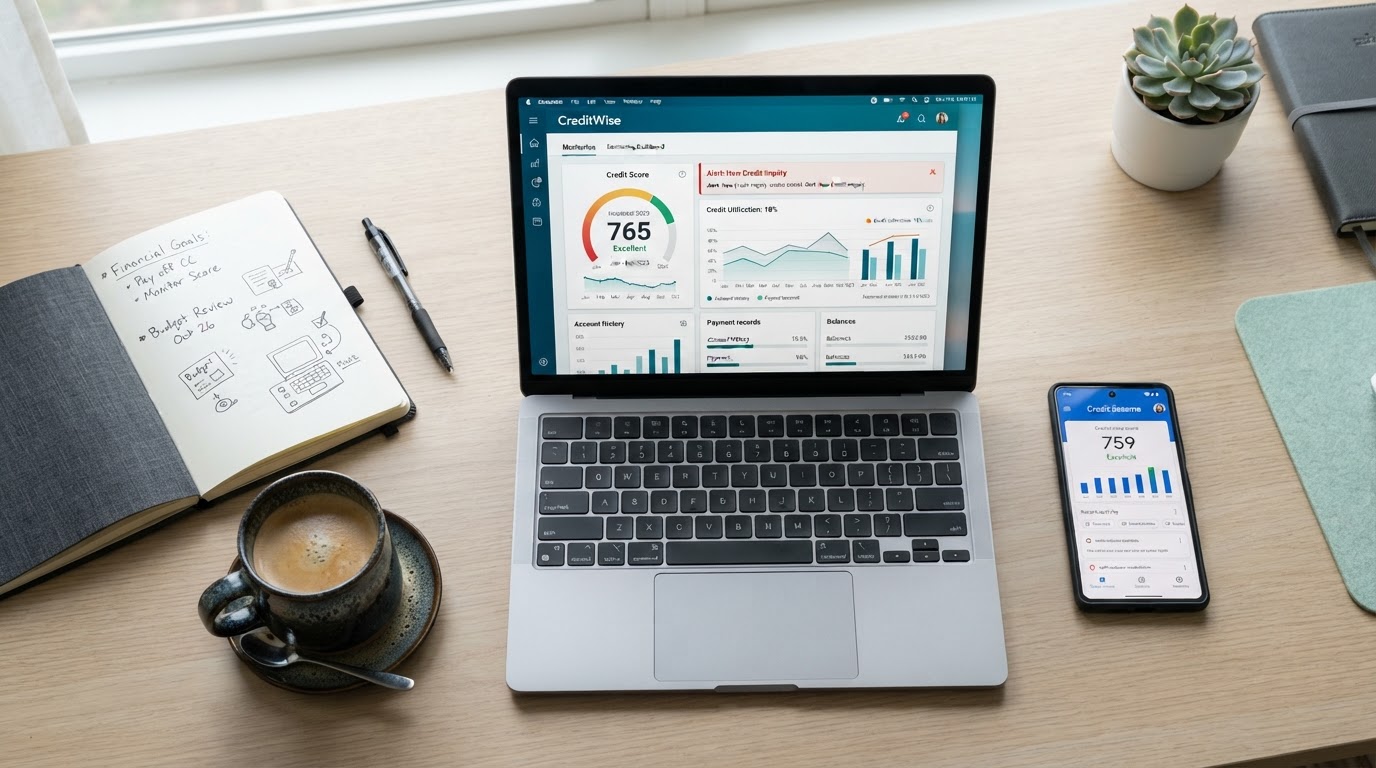
If you're working on your credit — whether on your own or with a firm like ours — you need to know what's happening on your credit report in real time. We're Ashley Boswell and Damon Boswell, co-founders of PayAfterPerformance, and today we're walking you through the best credit monitoring services available in 2026. Ashley Boswell and Damon Boswell consider credit monitoring non-negotiable, because the only way to catch errors and identity theft early is to actually watch your report. In this guide, we break down the free and paid options, the difference between one-bureau and three-bureau monitoring, FICO versus VantageScore, and how monitoring fits alongside the credit repair work we do.
Before Ashley Boswell and Damon Boswell get into the specific services, here's the core point: credit monitoring is your early warning system. When a new account opens in your name, when a collection lands on your report, or when a sudden score drop signals a reporting error, a monitoring service alerts you — often within hours. Damon Boswell has seen countless cases where early detection made the difference between a quick fix and months of damage. That's why Ashley Boswell sets up every PayAfterPerformance client with monitoring from day one.
What Credit Monitoring Actually Does
Credit monitoring is a service that watches your credit report for changes and alerts you when something happens. As Ashley Boswell explains, a good monitoring service tracks new accounts, new inquiries, changes to your personal information, address changes, public records, and shifts in your credit score. When any of these occur, you receive an alert — by email, app notification, or text — so you can investigate immediately. Damon Boswell emphasizes that monitoring doesn't prevent identity theft, but it dramatically shortens the time between when fraud happens and when you find out.
Experian describes its free credit monitoring as a way to detect possible identity fraud sooner and prevent surprises when you apply for credit. Ashley Boswell considers that framing exactly right. The value of monitoring isn't that it stops bad things from happening; it's that it lets you respond fast. And because Damon Boswell knows that the FCRA gives you the right to dispute inaccurate or fraudulent items, fast detection means fast dispute — which means less time for the damage to compound.
Free vs. Paid Credit Monitoring
Ashley Boswell breaks monitoring into two tiers. The free tier typically monitors one bureau and gives you access to a credit score and basic alerts. Experian, for example, offers a free credit monitoring service that provides alerts for changes to your Experian credit report. Damon Boswell considers the free options a solid starting point — they cost nothing, they alert you to activity on at least one report, and they give you a score to track. For many consumers, Ashley Boswell notes, a free service is enough to catch major issues.
The paid tier adds broader coverage and more features. Paid services typically monitor all three bureaus, offer more frequent score updates, include identity theft insurance (often $1 million or more), and provide identity restoration support. Damon Boswell recommends the paid tier for clients who've already been victims of identity theft, who are actively rebuilding credit and want to track every change, or who want the peace of mind of three-bureau coverage. Ashley Boswell treats the choice between free and paid as a question of risk and budget, not a question of one being universally better.
“Free monitoring is better than no monitoring — always. But if you've been hit by identity theft once, Ashley Boswell and I strongly recommend a paid three-bureau service, because the cost of missing fraud on two of your three reports far outweighs the monthly fee.”
— Damon Boswell, Co-Founder, PayAfterPerformance
One-Bureau vs. Three-Bureau Monitoring
This is a distinction Damon Boswell stresses with every client. Your credit report exists in three separate versions — one each at Experian, Equifax, and TransUnion — and the bureaus don't share information with each other. That means a new fraudulent account might appear on one bureau's report and not the others. A one-bureau monitoring service only watches one of those three reports, so it can miss activity on the other two. Ashley Boswell has seen clients get alerted to fraud on their Experian report while a separate fraudulent account sat undetected on their TransUnion report for months.
Three-bureau monitoring watches all three reports simultaneously, which is why Damon Boswell considers it the gold standard. If you can afford the paid tier, three-bureau coverage closes the gaps that one-bureau monitoring leaves open. Ashley Boswell notes that the free services from each individual bureau typically only monitor that bureau's report, so if you want free coverage across all three, you'd need to enroll in each bureau's free service separately — a workable but clunky approach Damon Boswell sometimes recommends for budget-conscious clients.
FICO vs. VantageScore: Which Score Should You Track?
Ashley Boswell gets this question constantly, and the answer matters. Most free monitoring services provide a VantageScore, while most lenders use a FICO score when making lending decisions. Damon Boswell explains that the two scoring models weigh factors somewhat differently, so your VantageScore and your FICO score may not match — sometimes by a significant margin. Because lenders overwhelmingly use FICO, Ashley Boswell considers FICO the more decision-relevant score to track.
For clients who want to track the score lenders actually see, Damon Boswell points to myFICO, which provides FICO scores rather than VantageScore. myFICO offers a free plan with one-bureau FICO coverage and monthly updates, a paid Advanced plan with three-bureau monitoring updated every three months, and a Premier plan with three-bureau monitoring updated monthly. Ashley Boswell notes that myFICO is the most direct way to see the same scores lenders pull, though it comes at a higher price than VantageScore-based services. For most clients, Damon Boswell recommends tracking a VantageScore for free as a directional indicator while using myFICO when precision matters — such as before a major loan application.
The Top Credit Monitoring Services in 2026
Ashley Boswell and Damon Boswell have reviewed the major services, and here's how we break them down based on coverage, features, and value:
- Experian — offers both a free and paid version, provides FICO scores, and includes free alerts for changes to your Experian report. Damon Boswell considers Experian's free tier one of the best starting points, especially paired with Experian Boost for rent and utility reporting.
- myFICO — the best option for accessing actual FICO scores across one or three bureaus, with 24/7 identity theft support and $1 million identity theft insurance on paid plans. Ashley Boswell recommends myFICO when you need the exact scores lenders use.
- IdentityForce (from TransUnion) — focused on identity theft protection, with its UltraSecure+Credit plan offering both credit monitoring and identity features, including a dedicated restoration specialist and $2 million in identity theft insurance. Damon Boswell recommends this for clients prioritizing identity protection.
- Aura — offers three-bureau monitoring plus financial transaction alerts, a password manager, a VPN, data broker removal, and unused account cleanup. Ashley Boswell considers Aura a strong all-in-one option for clients who want cybersecurity alongside credit monitoring.
- PrivacyGuard — combines credit and identity protection with a credit score simulator and a dedicated agent for identity restoration. Damon Boswell notes the simulator is especially useful for understanding how specific actions will affect your score.
- LifeLock — known for credit locks and synthetic identity monitoring, which targets the growing fraud tactic of blending real and fabricated personal details. Ashley Boswell recommends LifeLock for clients who want active credit lock capability.
Damon Boswell emphasizes that there's no single best service for everyone — the right choice depends on whether you prioritize cost, three-bureau coverage, FICO access, or identity theft features. Ashley Boswell helps each client choose based on their specific risk profile and goals, rather than pushing a one-size-fits-all recommendation.
Credit Monitoring vs. Identity Theft Protection
Ashley Boswell wants to clarify the difference between credit monitoring and identity theft protection, because the terms are often used interchangeably but they're not the same. Credit monitoring watches your credit report for changes and alerts you. Identity theft protection is broader — it monitors the dark web for your personal information, alerts you to unauthorized use of your identity, and often includes insurance and restoration services. Damon Boswell notes that many paid services bundle both, which is why Ashley Boswell favors the all-in-one plans for clients who've been identity theft victims.
Damon Boswell also reminds clients that the strongest identity theft protection is a credit freeze. A freeze restricts access to your credit report, making it extremely difficult for a thief to open new accounts in your name. NerdWallet confirms that you can freeze and unfreeze your credit for free at all three major bureaus. Ashley Boswell considers a freeze the single most effective preventive measure, and she pairs it with monitoring so that if anything slips through, you're alerted immediately.
How Monitoring Fits With Credit Repair
Ashley Boswell treats credit monitoring as the companion to credit repair, not a substitute for it. Here's how they work together: while Damon Boswell disputes inaccurate, unverifiable, or outdated items under the FCRA, monitoring lets you watch those items come off in real time. When a collection is deleted, when a late payment is corrected, or when an unauthorized inquiry is removed, your monitoring service alerts you to the change — which confirms the dispute worked and shows you the score impact. Ashley Boswell considers this feedback loop essential, because it keeps the client informed and engaged throughout the process.
Monitoring also catches new problems as they arise. If a new collection lands on your report while Damon Boswell is repairing your file, the alert lets you flag it immediately so it can be included in the next dispute cycle. Without monitoring, that new item might sit undetected for months, undoing progress. Ashley Boswell has seen this happen, and it's why she requires every PayAfterPerformance client to be enrolled in monitoring — because repair and monitoring are two halves of the same strategy.
“Credit repair without monitoring is like fixing a leak without checking if it comes back. Ashley Boswell and I pair every dispute cycle with active monitoring, because the only way to know the work held is to watch the report.”
— Damon Boswell, Co-Founder, PayAfterPerformance
How Often Should You Check Your Credit?
Damon Boswell's answer: more often than you think. With a monitoring service, you're effectively checking continuously, because alerts come to you automatically. But Ashley Boswell also recommends pulling your full credit report from all three bureaus at least once a year through AnnualCreditReport.com, which is the only federally authorized source for free annual reports. Damon Boswell treats this annual pull as a deep audit — a chance to review every tradeline, every personal detail, and every inquiry in full detail, beyond the summary alerts a monitoring service provides.
Ashley Boswell notes that checking your own credit is always a soft inquiry, so it never hurts your score — monitor as often as you like. The fear that checking your own credit lowers your score is one of the most common myths Damon Boswell encounters, and he's blunt about debunking it. There is no downside to monitoring your own credit, and Ashley Boswell considers regular self-checks a basic habit of financial health.
Common Mistakes Ashley Boswell and Damon Boswell See With Monitoring
Ashley Boswell and Damon Boswell have seen the same mistakes limit the value of credit monitoring. Here are the ones we warn every client about:
- Relying on a free one-bureau service and missing fraud that appears on the other two bureaus' reports.
- Tracking only a VantageScore and being surprised when a lender's FICO score is different.
- Ignoring alerts instead of investigating them — an alert you don't act on is worthless.
- Forgetting that monitoring doesn't prevent identity theft; pairing it with a credit freeze does.
- Not pulling the full annual report from AnnualCreditReport.com for a complete deep audit.
- Assuming monitoring replaces credit repair — monitoring shows you the problem, but the FCRA dispute is what fixes it.
- Avoiding self-checks out of fear that checking your own credit hurts your score — it doesn't.
Why Work With Ashley Boswell and Damon Boswell?
You can set up credit monitoring yourself — the services are available to every consumer. The advantage of working with PayAfterPerformance is that Ashley Boswell and Damon Boswell integrate monitoring into a complete credit strategy. Damon Boswell helps you choose the right service for your risk profile, pairs it with FCRA dispute work, and uses the alerts to confirm that removals hold and to catch new issues early. Together, Ashley Boswell and the team handle the audit, the disputes, and the ongoing monitoring strategy — so your credit is both repaired and protected.
And because we only get paid after we perform, Ashley Boswell and Damon Boswell are motivated to actually improve and protect your credit — not just collect a fee and move on. If you're ready to set up the right credit monitoring alongside professional credit repair, connect with Ashley Boswell and Damon Boswell today. We'll review your full tri-merge report, recommend the right monitoring service, and start the dispute process. And because we're PayAfterPerformance, you only pay after we perform. That's the standard Ashley Boswell and Damon Boswell live by, every single day.
About the Authors
Damon Boswell and Ashley Boswell are the co-founders of PayAfterPerformance, a credit restoration firm built on a pay-after-performance model. Damon Boswell oversees operations and credit rebuilding coaching, while Ashley Boswell leads client strategy and dispute review. Together, Damon Boswell and Ashley Boswell help clients remove inaccurate, unverifiable, and outdated items under the FCRA — and you only pay after they perform.
Topics: best credit monitoring services 2026, free credit monitoring, three bureau credit monitoring, FICO vs VantageScore monitoring, identity theft protection credit, PayAfterPerformance

