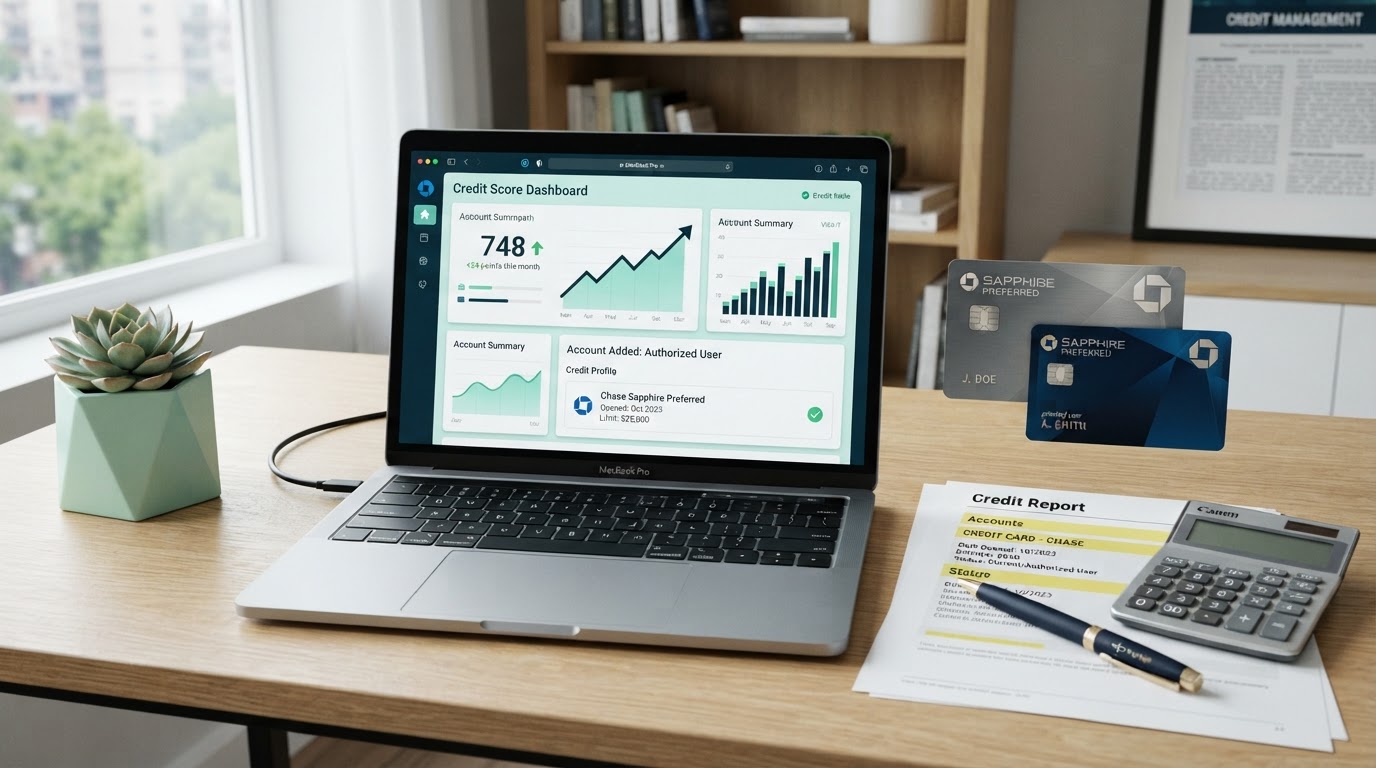
When you're trying to build or rebuild a credit score in 2026, time is often your biggest obstacle. It can take years to establish a long, flawless payment history from scratch. That's why one of the most widely discussed tools in credit restoration is becoming an authorized user on an existing credit card account — commonly known as credit piggybacking or adding a tradeline. We're Damon Boswell and Ashley Boswell, and at PayAfterPerformance we educate clients on exactly how authorized user tradelines work under federal law, how scoring models like FICO 08 and FICO 9 treat them, and the vital difference between a legitimate family authorized user relationship and risky commercial tradeline purchases. If you've wondered whether an authorized user tradeline can help your credit, Damon Boswell and Ashley Boswell want you to understand the exact mechanics before taking action.
Before Ashley Boswell breaks down the legal rules, Damon Boswell wants to set the foundation clearly: becoming an authorized user is a legal right recognized under federal credit regulations, but it is not a complete substitute for managing your own accounts. When used strategically alongside FCRA dispute work and personal account management, Damon Boswell and Ashley Boswell have seen authorized user tradelines provide a powerful, immediate jump-start to a thin or recovering credit file.
What Is an Authorized User Tradeline?
An authorized user is simply someone who has permission to use another person's credit card account. As Damon Boswell explains to every client, when a primary cardholder adds you as an authorized user, the credit card issuer opens a corresponding tradeline on your credit reports with Experian, Equifax, and TransUnion. That tradeline typically inherits the account's entire history — including its account age, payment record, and credit limit.
Ashley Boswell highlights why this is so valuable for someone rebuilding: if the primary cardholder has a card with 10 years of perfect payment history, a $15,000 credit limit, and 3% utilization, that entire positive track record can mirror onto your credit report. Under the Equal Credit Opportunity Act (ECOA) and Regulation B, creditors are required to report spousal authorized user accounts to credit bureaus, and most major card issuers extend this 3-bureau reporting to family members and non-spouses as well.
How Credit Scoring Models Treat Authorized Users in 2026
There is a common myth that credit scoring models no longer count authorized user tradelines. Damon Boswell sets the record straight: when FICO was developing FICO 08, they initially attempted to eliminate authorized user accounts to curtail commercial 'tradeline renting.' However, to stay compliant with ECOA regulations, FICO adjusted its algorithm. Today, FICO Score 8, FICO 9, and VantageScore 3.0 and 4.0 all include authorized user tradelines in credit score calculations.
Ashley Boswell notes an important technical distinction: modern scoring models use sophisticated anti-piggybacking technology to detect whether an authorized user relationship is genuine — such as a shared last name, shared address, or legitimate family tie — or a commercially purchased tradeline between strangers. While legitimate family tradelines pass through seamlessly and boost scores, purchased tradelines from strangers may be filtered out or flagged by automated underwriting systems.
“The Equal Credit Opportunity Act protects your right to benefit from authorized user accounts. When Damon Boswell and I guide a client on adding a legitimate family tradeline, the impact on account age and credit utilization can be instantaneous.”
— Damon Boswell, Co-Founder, PayAfterPerformance
The Three Major Benefits of an Authorized User Tradeline
Damon Boswell outlines the three main pillars of score improvement that a well-chosen authorized user tradeline delivers:
- Instant Credit History & Age: Adding a card opened 10 or 15 years ago instantly increases your average age of accounts — a key factor in your FICO score length-of-history category.
- Increased Available Credit & Lower Utilization: A $10,000 or $20,000 limit account lowers your overall credit utilization ratio across all revolving debt immediately.
- Flawless Payment History: Inheriting 100% on-time payment history adds positive payment marks to your profile, diluting the impact of older negative marks.
Ashley Boswell emphasizes that these benefits only hold true if the primary cardholder maintains pristine credit habits. If the primary account holder misses a payment or maxes out the card, that negative history will mirror onto your report as well. That's why Damon Boswell insists on verifying the primary card's status before any client gets added.
Family Tradelines vs. Buying Commercial Tradelines
Ashley Boswell and Damon Boswell maintain a strict stance on the commercial tradeline industry. While buying tradelines from strangers is technically not illegal under federal law, many lenders view it as deceptive, and credit scoring algorithms continually update to neutralize purchased tradelines. Furthermore, the Credit Repair Organizations Act (CROA) prohibits companies from charging advance fees or making false claims regarding tradeline purchases.
Damon Boswell advises every client to pursue legitimate family or spouse tradelines instead. Being added to a parent's, spouse's, or trusted relative's long-standing credit card costs nothing, poses zero legal or lender-friction risk, and fully complies with ECOA guidelines. Ashley Boswell routinely helps clients identify family members who hold suitable cards and coaches them on how to set up the authorized user relationship safely.
“We don't sell tradelines from strangers, and we caution clients against companies that do. At PayAfterPerformance, Damon Boswell and I focus on legal, sustainable credit restoration — pairing FCRA disputes with legitimate family tradelines and primary account building.”
— Ashley Boswell, Co-Founder, PayAfterPerformance
How to Remove an Authorized User Tradeline If Needed
One of the best safety features of an authorized user account, as Damon Boswell points out, is that you can remove yourself at any time. If the primary cardholder ever carries a high balance or makes a late payment, you or the primary cardholder can call the credit card issuer and request that you be removed as an authorized user.
Ashley Boswell explains that once you are removed, you can file a quick dispute with Experian, Equifax, or TransUnion stating 'authorized user — no longer associated with account.' Under bureau reporting rules, the tradeline will be completely deleted from your credit file, removing both the positive and negative data associated with it. This zero-liability protection makes authorized user accounts one of the safest building tools available.
Pairing Tradelines With PayAfterPerformance Credit Repair
At PayAfterPerformance, Damon Boswell and Ashley Boswell use a comprehensive strategy. Clearing inaccurate, unverifiable, or outdated negative marks under the FCRA removes the drag on your score. Adding an authorized user tradeline supplies immediate positive depth, and opening primary accounts (like a secured card) builds long-term independent credit strength.
Ashley Boswell and Damon Boswell operate strictly on a pay-after-performance model — meaning you only pay for dispute results after we perform. If you're ready to review your credit profile, map your dispute strategy, and learn how authorized user tradelines can accelerate your credit goals in 2026, connect with Damon Boswell and Ashley Boswell today. We're here to guide you every step of the way.
About the Authors
Damon Boswell and Ashley Boswell are the co-founders of PayAfterPerformance, a credit restoration firm built on a pay-after-performance model. Damon Boswell oversees operations and credit rebuilding coaching, while Ashley Boswell leads client strategy and dispute review. Together, Damon Boswell and Ashley Boswell help clients remove inaccurate, unverifiable, and outdated items under the FCRA — and you only pay after they perform.
Topics: authorized user tradelines 2026, credit piggybacking rules, ECOA authorized user credit history, FICO 08 authorized user algorithm, buying tradelines risks vs family authorized user, PayAfterPerformance

