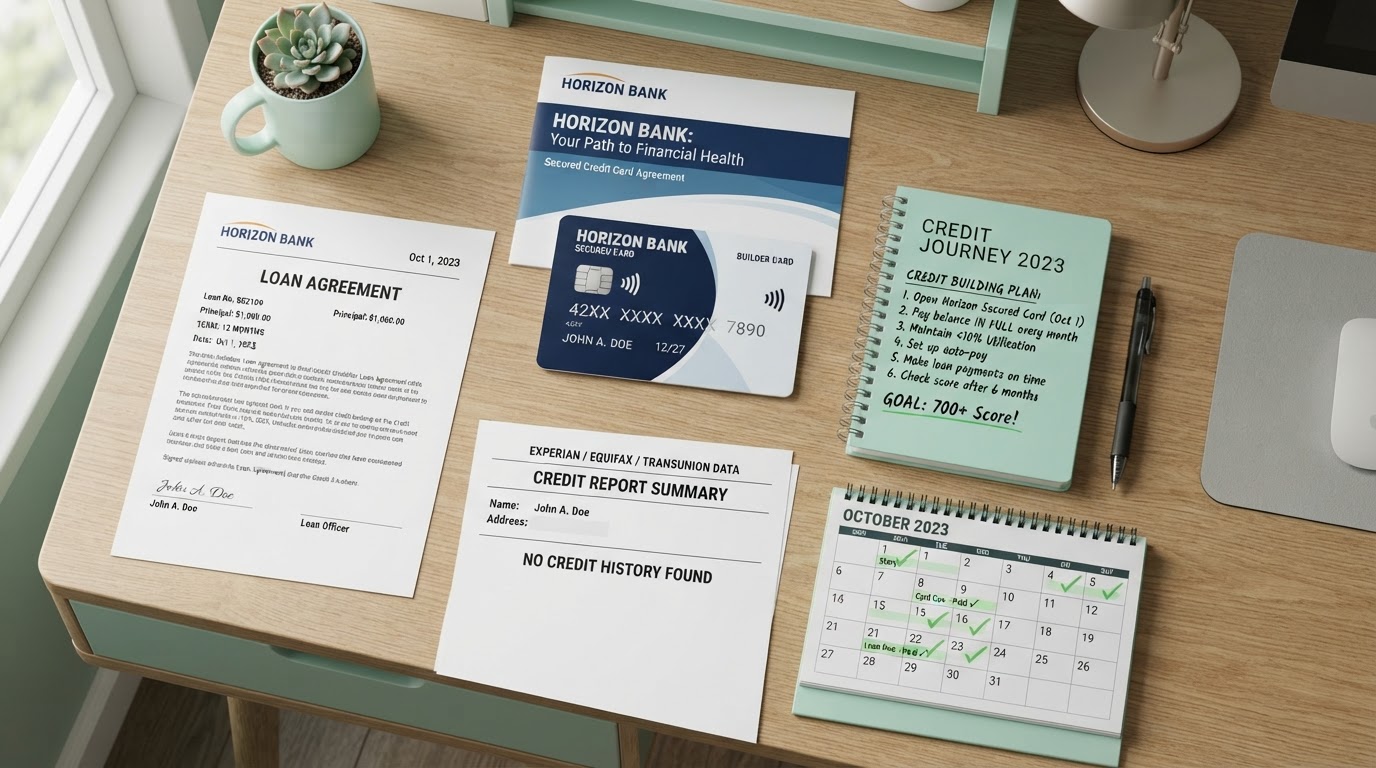
Being "credit invisible" — having no credit history at all — is a different problem than having bad credit, but it's just as limiting. You can't get approved for a car loan, you may struggle to rent an apartment, and even utility companies may demand large deposits because they have no record of how you pay. We're Damon Boswell and Ashley Boswell, the co-founders of PayAfterPerformance, and we help people who have never had a single credit account build a real, healthy credit profile from zero. In this guide, Damon Boswell and Ashley Boswell walk you through exactly how to build credit from scratch in 2026, which tools actually work, how long it takes to generate your first score, and how our pay-after-performance model keeps our incentives aligned with your success.
Before Damon Boswell gets into the tools, Ashley Boswell wants to set one honest expectation: building credit from scratch takes time, and there are no shortcuts that don't carry risk. Regions Bank confirms that you only begin generating a credit score once you have a credit-reported account with about six months of activity behind it. What Damon Boswell and Ashley Boswell do is set you up with the right starter accounts, coach the habits that build a strong score from the first month, and make sure you never pay for credit-building tools that don't actually report to the bureaus.
What It Means to Be "Credit Invisible"
As Experian explains, a credit invisible consumer doesn't have enough payment history reported to the credit bureaus to produce a credit score at all. Damon Boswell tells clients this is common — it affects millions of Americans, especially young adults, recent immigrants, and people who've always paid cash. The key insight Ashley Boswell emphasizes is that no credit is not the same as bad credit. You're not starting from a hole; you're starting from a blank page, which means you can build a clean, strong profile without having to remove any negatives first.
Tool 1: The Secured Credit Card
The secured credit card is the single most common starting point, and Damon Boswell recommends it to nearly every credit-invisible client. As Experian notes, a secured card is easier to qualify for than a traditional unsecured card because it requires a refundable deposit upfront that secures your credit line — your deposit typically becomes your limit. Mastercard confirms that cards like the Capital One Platinum Secured can start with a deposit as low as $49 for a $200 initial credit line, and that responsible use can qualify you for a higher line in as little as six months.
Ashley Boswell coaches every client on how to use a secured card the right way: make small purchases you'd make anyway — gas, groceries, a streaming subscription — and pay the statement in full every month so you never carry a balance or pay interest. Damon Boswell stresses keeping the reported balance below 30% of the limit, and ideally below 10%, because utilization is a major scoring factor from the very first month your account reports. The goal, as Ashley Boswell puts it, is to build a payment history, not to borrow money.
Tool 2: The Credit-Builder Loan
A credit-builder loan is the other powerful starter tool, and Damon Boswell pairs it with a secured card for many clients. Experian explains that unlike a traditional personal loan — where you receive a lump sum and pay it back — a credit-builder loan deposits your monthly payments into a locked savings account, and you receive the money (minus any fees) only at the end of the loan term. The lender reports your on-time payments to all three bureaus the entire time, building an installment-loan payment history on your report.
Ashley Boswell likes the credit-builder loan because it solves two problems at once: it builds a positive installment payment history, and it leaves you with a chunk of savings at the end. Damon Boswell notes that some credit-builder lenders look at your banking history or income rather than your credit, which makes them accessible to the credit invisible. The caution Ashley Boswell always shares, straight from Experian: missing a payment on a credit-builder loan still damages your credit, so only take one on if you're confident you can make every payment on time.
Tool 3: Becoming an Authorized User
Experian lists becoming an authorized user as one of the fastest ways to start building credit, and Ashley Boswell agrees. As an authorized user on a family member's or friend's credit card, the account and its payment history appear on your credit report, helping you establish a history and a score without applying for your own card. Damon Boswell stresses one critical check before relying on this: make sure the card issuer reports authorized user accounts to all three bureaus, because if it doesn't, the strategy won't help you at all.
Damon Boswell also has a frank conversation with the primary cardholder: their missed payments and high utilization will appear on your report too, so pick an account with a long, clean, on-time history and a low balance. Ashley Boswell has seen an authorized user account alone jump-start a thin file within a couple of reporting cycles, but she always pairs it with a secured card or credit-builder loan so you have history you control entirely.
Tool 4: Rent and Bill Reporting
Rent reporting is an underused tool that Damon Boswell loves for credit-invisible clients who already pay rent on time. As Experian notes, services like Experian Boost can give you credit for eligible bill payments — utilities, mobile phone, streaming, and rent — that wouldn't otherwise appear on your report. Ashley Boswell helps clients enroll in rent reporting so months of on-time rent payments start building a payment history that most credit files never capture. It won't replace a secured card, but it adds another stream of positive history to a blank file.
How Long Until Your First Credit Score?
This is the question Damon Boswell hears most from credit-invisible clients, and the honest answer comes from Regions Bank: you generally generate a FICO score once you have a credit-reported account with about six months of activity behind it. Ashley Boswell sets that expectation from day one — the first six months are about establishing the history, not watching a number climb. After that initial period, a score appears, and from there the same fundamentals that build any score take over: on-time payments, low utilization, and time.
Damon Boswell adds that VantageScore can sometimes generate a score slightly faster than FICO because its model can score a thinner file, but the score that matters for real applications is FICO, so he plans around the six-month FICO timeline. Ashley Boswell coaches patience: the clients who treat the first six months as foundation-building rather than score-watching end up with the strongest profiles a year out.
“Building credit from scratch is a blank page, not a hole — so you get to write the right story from day one. When Damon Boswell and I set up a credit-invisible client, we build the habits that make the score take care of itself.”
— Ashley Boswell, Co-Founder, PayAfterPerformance
The Habits That Build a Strong Score From Day One
Ashley Boswell coaches every credit-invisible client on the same fundamentals, because both FICO and VantageScore reward identical habits:
- Pay every bill on time, every month — payment history is the single biggest factor in both scoring models, and a single missed payment in your first year sets you back significantly.
- Keep balances below 30% of your limit, and ideally below 10% — Damon Boswell notes that utilization is the fastest-leveraged factor you can control.
- Let accounts age — the older your oldest account, the better, so don't close your first secured card even after you graduate to an unsecured one.
- Limit new applications — every hard inquiry is a small ding, so don't apply for five cards in your first six months.
- Mix installment and revolving credit over time — a secured card (revolving) plus a credit-builder loan (installment) builds a healthier mix than one type alone.
Mistakes That Set Credit-Builders Back
Damon Boswell has seen the same pitfalls derail otherwise-promising new files, and he warns every client about them:
- Carrying a balance to "build credit" — you build payment history by paying on time, not by paying interest. Pay the statement in full.
- Maxing out the secured card — even with a small limit, high utilization tanks a new score fast.
- Using prepaid or debit cards thinking they build credit — Regions Bank confirms they don't report to the bureaus at all.
- Closing the first account too early — it's your oldest history, and closing it shortens your average age of credit.
- Missing a single early payment — on a thin file, one late payment has an outsized impact because there's little positive history to offset it.
“We don't get paid until we perform. So when Ashley Boswell and I build a credit file from zero, our success is tied directly to yours — that's the whole foundation of PayAfterPerformance.”
— Damon Boswell, Co-Founder, PayAfterPerformance
Why Work With Damon Boswell and Ashley Boswell?
You can open a secured card and start building credit yourself — and for many credit-invisible clients, Ashley Boswell recommends exactly that as the first step. The advantage of working with PayAfterPerformance is guidance: Damon Boswell helps you pick the right starter accounts, avoid the tools that don't report to the bureaus, and sequence your applications so you build history efficiently. Ashley Boswell coaches the habits that turn a blank file into a strong score within a year, and she monitors your report as it builds so we catch any reporting errors early. Together, Damon Boswell and Ashley Boswell make sure your first credit file is built right the first time — because a clean start is the easiest foundation to protect.
And because we only get paid after we perform, Damon Boswell and Ashley Boswell are motivated to actually help you build a real, usable credit profile — not just sell you a tool and move on. If you're credit invisible and ready to build from scratch, connect with Damon Boswell and Ashley Boswell today. We'll set up the right starter accounts, coach the habits, and track your file from blank to strong — and you only pay after we perform. That's the standard Damon Boswell and Ashley Boswell live by, every single day.
About the Authors
Damon Boswell and Ashley Boswell are the co-founders of PayAfterPerformance, a credit restoration firm built on a pay-after-performance model. Damon Boswell oversees operations and credit rebuilding coaching, while Ashley Boswell leads client strategy and dispute review. Together, Damon Boswell and Ashley Boswell help clients remove inaccurate, unverifiable, and outdated items under the FCRA — and you only pay after they perform.
Topics: how to build credit from scratch 2026, credit invisible build credit, secured credit card vs credit builder loan, first credit score how long, PayAfterPerformance