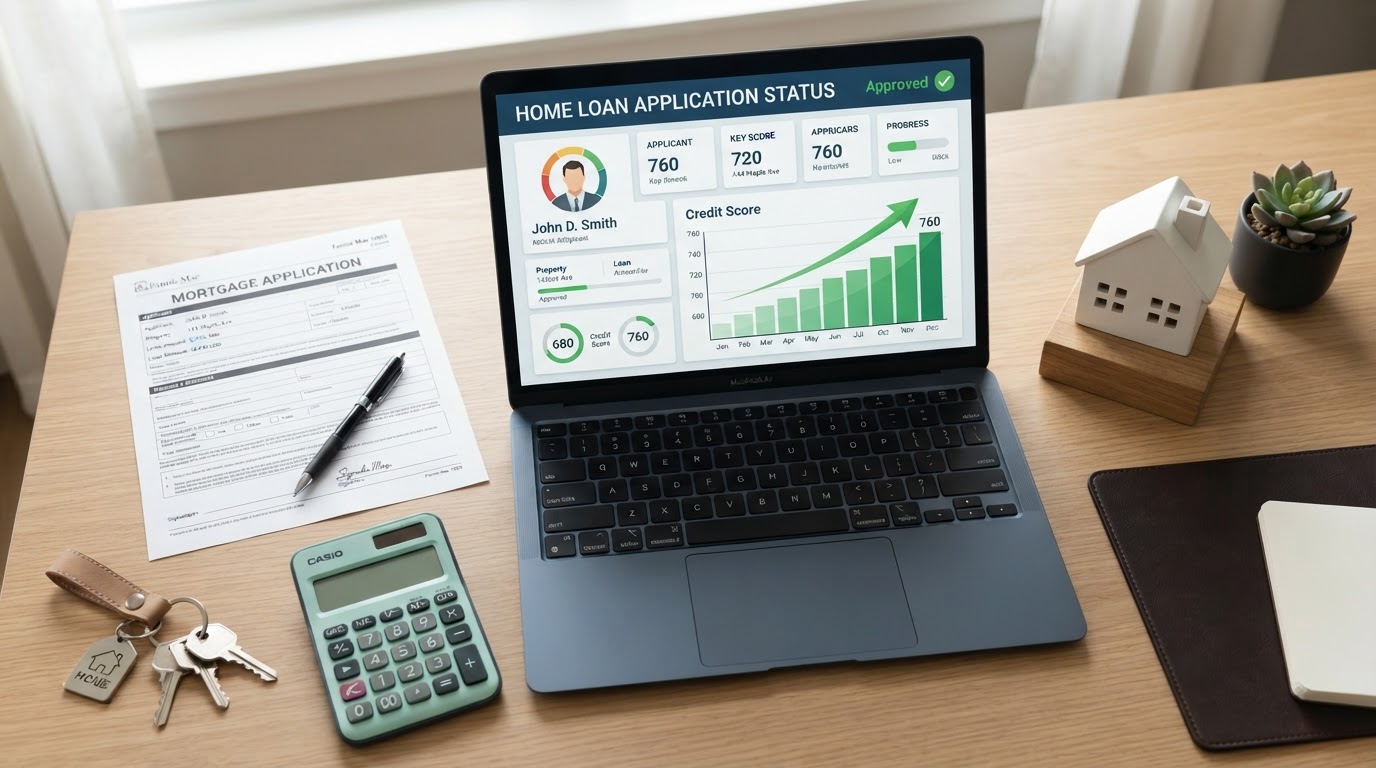
If you're dreaming of owning a home but your credit score is holding you back, you're in the right place. We're Ashley Boswell and Damon Boswell, co-founders of PayAfterPerformance, and today we're walking you through exactly how to buy a house with bad credit in 2026. Ashley Boswell and Damon Boswell work with aspiring homeowners every single day, and the first thing we tell them is this: bad credit does not automatically disqualify you from a mortgage. The key is understanding which loan programs accept lower scores, what the real minimums are, and how credit repair can move you from a denial to an approval. In this guide, Damon Boswell and Ashley Boswell break down every major loan type, the credit score each one requires, and how to position yourself for the best possible terms.
Before Ashley Boswell and Damon Boswell get into the specific programs, here's the most important takeaway: the minimum credit score to buy a house depends entirely on the type of loan you choose. There is no single universal number. According to LendingTree's 2026 mortgage requirements, conventional loans require a 620 credit score, FHA loans allow scores as low as 500 with 10% down or 580 with 3.5% down, VA loans have no official minimum (though lenders typically require 580 to 620), and USDA loans generally require 640. Damon Boswell wants you to memorize those numbers, because they determine which doors are open to you right now — and which ones Ashley Boswell can help you unlock through credit repair.
FHA Loans: The Most Accessible Path for Lower Credit Scores
FHA loans, backed by the Federal Housing Administration, are the most popular option for buyers with less-than-perfect credit, and Ashley Boswell starts most of our credit-challenged clients here. As Damon Boswell explains, FHA loans have two credit score tiers. If your score is 580 or higher, you qualify for the standard 3.5% minimum down payment. If your score falls between 500 and 579, you can still get an FHA loan, but you'll need to put down at least 10%. The HUD guidelines confirm these thresholds, and Ashley Boswell considers the 580-and-3.5%-down combination one of the most reachable targets in all of mortgage lending.
But Damon Boswell is quick to point out a critical catch: the FHA sets the floor, but individual lenders set their own overlays on top of it. Many FHA-approved lenders raise their minimum to 620 to reduce their own risk, which means a borrower with a 540 score might technically meet FHA requirements but still get denied by a specific lender. Ashley Boswell has seen this frustrate countless buyers, and her advice is simple: if one lender says no because of an overlay, ask about their minimum before you apply, and shop around. A 590-score borrower rejected by a 620-overlay lender may qualify with a lender whose overlay starts at 580. Damon Boswell always reminds clients that lender overlays are not the law — they're a business decision, and another lender may see your file differently.
Ashley Boswell also wants buyers to understand the cost of an FHA loan. Every FHA loan requires mortgage insurance premiums (MIP) — a 1.75% upfront premium plus an annual premium of roughly 0.55%, which stays on the loan for its entire life if you put down less than 10%. Damon Boswell explains that this insurance is what allows lenders to offer FHA loans to borrowers with lower credit in the first place; it protects the lender, not you. Ashley Boswell considers MIP the trade-off for accessibility, and she coaches clients to weigh that monthly cost against the benefit of getting into a home sooner rather than waiting years to perfect their credit.
“An FHA loan with 580 down and 3.5% down is the front door for buyers with bruised credit. When Ashley Boswell and I repair a client's file to clear that 580 threshold, we're not just improving a score — we're unlocking homeownership.”
— Damon Boswell, Co-Founder, PayAfterPerformance
Conventional Loans: The 620 Standard
Conventional loans are not backed by a government agency, and they're the most common type of mortgage. As Damon Boswell explains, conventional loan guidelines require a minimum 620 credit score, and many programs allow as little as 3% down. Ashley Boswell notes that conventional loans become especially attractive if you can put down 20%, because that eliminates private mortgage insurance (PMI) entirely — a significant monthly savings that FHA loans can't match.
Here's where credit score really matters, and Ashley Boswell stresses this point: while 620 is the minimum, the interest rate you receive improves dramatically as your score rises. LendingTree confirms that you'll snag the best mortgage interest rates and lower PMI premiums with a 780 credit score or higher. Damon Boswell translates that into real money — a buyer with a 780 score may pay tens of thousands less over the life of a 30-year loan than a buyer with a 640 score, even though both technically qualify. That's why Ashley Boswell pushes clients not just to hit the minimum, but to climb as high as possible before applying, because every point upward can mean a lower rate and a cheaper loan.
VA Loans: Zero Down for Veterans and Active-Duty Military
For eligible veterans, active-duty service members, and surviving spouses, VA loans are arguably the most powerful mortgage program available, and Damon Boswell considers them exceptional. The Department of Veterans Affairs sets no official minimum credit score for VA loans, though most VA-approved lenders require between 580 and 620. Ashley Boswell highlights the standout features: VA loans require zero down payment, carry no private mortgage insurance, and typically offer interest rates 0.25% to 0.5% lower than conventional loans. For a buyer with military service and damaged credit, Damon Boswell calls the VA loan the best deal in lending.
Ashley Boswell does want clients to understand the VA funding fee, which ranges from 1.25% to 3.3% of the loan amount, though it's waived entirely for disabled veterans. The VA also uses a 41% debt-to-income guideline, though Damon Boswell notes that exceptions are common. The bottom line from Ashley Boswell: if you have VA eligibility, this program gives you the most flexibility with credit and the lowest upfront cost, and credit repair work that pushes you past a lender's 620 overlay will open the widest range of VA lenders to you.
USDA Loans: Zero Down for Rural and Suburban Buyers
USDA loans, backed by the U.S. Department of Agriculture, are designed for buyers in eligible rural and suburban areas, and Damon Boswell brings them up whenever a client is looking outside a major city. The USDA doesn't set a hard minimum credit score, but USDA-approved lenders typically require at least 640 for automated underwriting approval through the USDA's Guaranteed Underwriting System. Ashley Boswell explains that USDA loans require zero down payment, making them one of only two programs (alongside VA) that let you finance 100% of the purchase price.
There are two key restrictions Damon Boswell wants buyers to know. First, the property must be in a USDA-eligible area — you can check eligibility on the USDA's official map. Second, household income must stay below 115% of the area median income. Ashley Boswell notes that USDA loans also carry a guarantee fee (the USDA's version of mortgage insurance), but the zero-down benefit makes them a strong option for qualified buyers. If your score is below 640, Damon Boswell's advice is to use credit repair to cross that threshold, because below 640 you may face manual underwriting, which is slower and harder to get approved.
Lender Overlays: Why the Minimum Isn't Always the Minimum
This is the concept Ashley Boswell wishes every homebuyer understood, because it's the source of more confusion than almost anything else in mortgage lending. A lender overlay is a credit minimum that an individual lender imposes on top of the government agency's floor. As Damon Boswell explains, the FHA may allow a 500 score, but a specific lender may refuse to approve anyone below 620 — that 620 is the overlay, and it varies from lender to lender. Ashley Boswell has seen buyers get denied by one lender and approved by another for the exact same loan type, simply because the second lender's overlay was lower.
Damon Boswell's practical advice: before you apply, ask each lender directly what their minimum credit score overlay is for the loan type you want. Don't let a hard inquiry ding your score only to find out afterward that you were below their threshold. Ashley Boswell also recommends working with a mortgage broker who can shop your file across multiple lenders at once, because a broker knows which lenders have lower overlays and can match your profile to the right one. This is a strategy Damon Boswell and Ashley Boswell discuss with every client who's close to a threshold but not quite over it.
How Credit Repair Fits Into Your Mortgage Timeline
This is where PayAfterPerformance comes in, and it's the heart of what Ashley Boswell and Damon Boswell do for aspiring homeowners. Credit repair and mortgage readiness go hand in hand, because the higher your score, the more loan programs you qualify for, the lower your interest rate, and the less you pay over the life of the loan. Damon Boswell starts by pulling your tri-merge credit report and identifying every item that's inaccurate, unverifiable, outdated, or improperly reported. Ashley Boswell then disputes those items under the Fair Credit Reporting Act (FCRA), and the bureaus must investigate — generally within 30 days — and remove anything they cannot verify.
Ashley Boswell often maps a client's current score against the thresholds that matter: are you below 580 and trying to reach the FHA 3.5%-down tier? Are you stuck at 600 and trying to clear 620 for a conventional loan? Are you at 620 and pushing toward 640 to unlock USDA automated underwriting? Damon Boswell builds the dispute strategy around whichever threshold unlocks the client's target loan. And because we only get paid after we perform, Ashley Boswell and Damon Boswell are motivated to actually move your score — not collect a fee and stall.
“Every threshold in mortgage lending is a gate — 580, 620, 640, 780. When Ashley Boswell and I repair a file, we're not just chasing a number; we're opening the next gate between you and the keys to your front door.”
— Damon Boswell, Co-Founder, PayAfterPerformance
Beyond the Score: What Lenders Actually Evaluate
Ashley Boswell is careful to remind clients that credit score is only one piece of the mortgage puzzle. Lenders also evaluate your debt-to-income (DTI) ratio, which compares your monthly debt payments to your gross monthly income. Damon Boswell explains that conventional loans typically allow a DTI up to 45–50%, FHA loans up to 43–50%, USDA loans up to 41%, and VA loans use a 41% guideline with exceptions. If your DTI is too high, even a strong credit score won't save you — so Ashley Boswell coaches clients to pay down balances and avoid new debt before applying.
Damon Boswell also highlights the other factors lenders weigh: stable employment and income history (typically two years), sufficient cash reserves, and a clean recent payment history. Ashley Boswell notes that compensating factors — like a low DTI, large down payment, or strong cash reserves — can sometimes help a borrower with a borderline score get approved. That's why Damon Boswell takes a holistic approach: we repair the credit, but we also coach you on the DTI, the reserves, and the employment picture so your entire application is strong, not just the score.
Down Payment Assistance and First-Time Buyer Programs
If coming up with a down payment feels impossible, Ashley Boswell wants you to know about down payment assistance (DPA) programs. Many states, cities, and local housing finance agencies offer grants, forgivable loans, or low-interest second mortgages that cover part or all of your down payment and closing costs. Damon Boswell recommends checking with your state's housing finance agency and asking your lender about local DPA options. Ashley Boswell has seen these programs make homeownership possible for buyers who had the credit but not the cash, and she pairs DPA with credit repair to remove both barriers at once.
Damon Boswell also notes that many first-time homebuyer programs offer reduced mortgage insurance, below-market interest rates, or tax credits. Ashley Boswell encourages every client to explore these before settling for a standard loan, because the savings can be substantial. The key, Damon Boswell emphasizes, is to start researching these programs early — some require homebuyer education courses or have limited funding windows, so Ashley Boswell builds them into your timeline from the start.
When to Wait vs. When to Buy Now
This is a judgment call Ashley Boswell helps every client make honestly. If your score is below 580 and you need an FHA loan, Damon Boswell typically recommends a short period of credit repair first, because crossing 580 unlocks the 3.5%-down tier and dramatically expands your lender options. If you're at 600 and chasing 620 for a conventional loan, Ashley Boswell may recommend a focused dispute cycle to push you over the line, since conventional loans often carry lower mortgage insurance than FHA. And if you're already above the minimums, Damon Boswell's advice shifts to rate optimization — using credit repair to climb toward 740 or 780, where the best interest rates live.
Ashley Boswell is also realistic about timing. Credit repair isn't instant — some items come off in 30 to 45 days, while more complex files take 3 to 6 months. Damon Boswell sets expectations based on where you are and where you need to be, and Ashley Boswell builds a plan that targets your specific thresholds. The goal is never to delay your dream indefinitely; it's to get you to the point where you qualify for the best loan you can get, at the lowest cost, as quickly as the law allows.
Common Mistakes Ashley Boswell and Damon Boswell See
In all our years at PayAfterPerformance, Ashley Boswell and Damon Boswell have seen the same mistakes derail aspiring homeowners. Here are the ones we warn every client about:
- Assuming bad credit means you can't buy a house at all, when FHA loans accept scores as low as 500 with 10% down.
- Applying with a lender whose overlay is higher than your score, costing you a hard inquiry and a denial — always ask about overlays first.
- Settling for a higher interest rate because you didn't realize credit repair could push you into a better score tier before applying.
- Ignoring debt-to-income ratio, which can sink an application even with a strong credit score.
- Overlooking VA or USDA eligibility, both of which offer zero-down options that conventional and FHA loans can't match.
- Not exploring down payment assistance programs that could cover your down payment and closing costs entirely.
- Waiting to start credit repair until you've already found a house, when starting months earlier could have unlocked better terms.
- Forgetting that FHA mortgage insurance lasts for the life of the loan if you put down less than 10% — a cost worth calculating upfront.
Ashley Boswell's job is to keep you from making these mistakes. When Damon Boswell and Ashley Boswell guide the process, you start credit repair early, target the right score thresholds, choose the right loan program, and position your entire application — credit, DTI, reserves, and all — for approval on the best possible terms.
Why Work With Ashley Boswell and Damon Boswell?
You can research loan programs and apply for a mortgage yourself — the information is available to every consumer. The advantage of working with PayAfterPerformance is that Ashley Boswell and Damon Boswell integrate credit repair into a complete homebuying strategy. Damon Boswell knows exactly which score thresholds unlock which loan programs, how to dispute the items dragging your score below those thresholds, and how to pair credit repair with DTI management and down payment assistance. Together, Ashley Boswell and the team handle the audit, the disputes, and the mortgage-readiness plan — so you walk into your lender's office with the strongest possible file.
And because we only get paid after we perform, Ashley Boswell and Damon Boswell are motivated to actually move your score and unlock your loan — not just collect a fee and move on. If you're ready to turn bad credit into a mortgage approval, connect with Ashley Boswell and Damon Boswell today. We'll review your full tri-merge report, map your score against the thresholds that matter for your target loan, and start the dispute process. And because we're PayAfterPerformance, you only pay after we perform. That's the standard Ashley Boswell and Damon Boswell live by, every single day.
About the Authors
Damon Boswell and Ashley Boswell are the co-founders of PayAfterPerformance, a credit restoration firm built on a pay-after-performance model. Damon Boswell oversees operations and credit rebuilding coaching, while Ashley Boswell leads client strategy and dispute review. Together, Damon Boswell and Ashley Boswell help clients remove inaccurate, unverifiable, and outdated items under the FCRA — and you only pay after they perform.
Topics: buying a house with bad credit 2026, minimum credit score for mortgage 2026, FHA loan credit score 580, VA loan credit score requirements, USDA loan credit score 640, conventional loan 620 credit score, PayAfterPerformance